
Last updated November 2, 2026
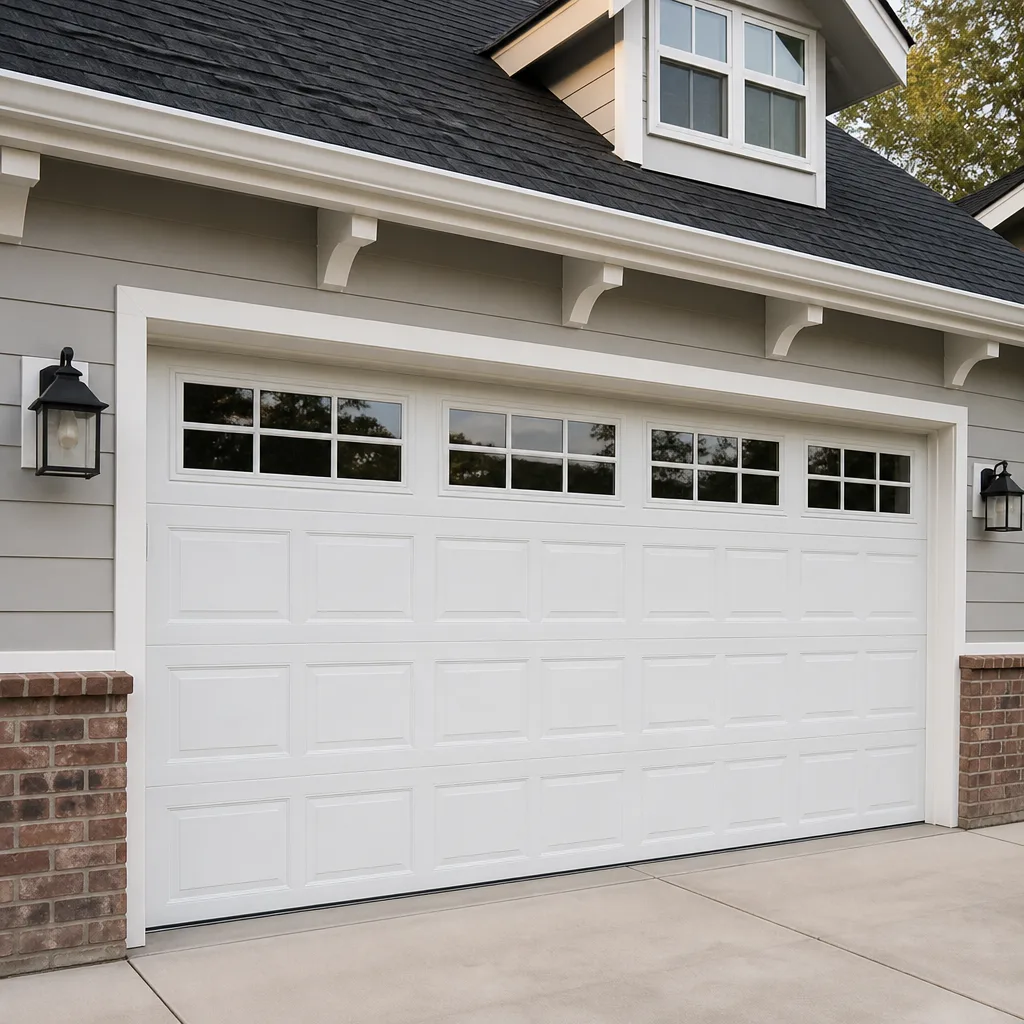
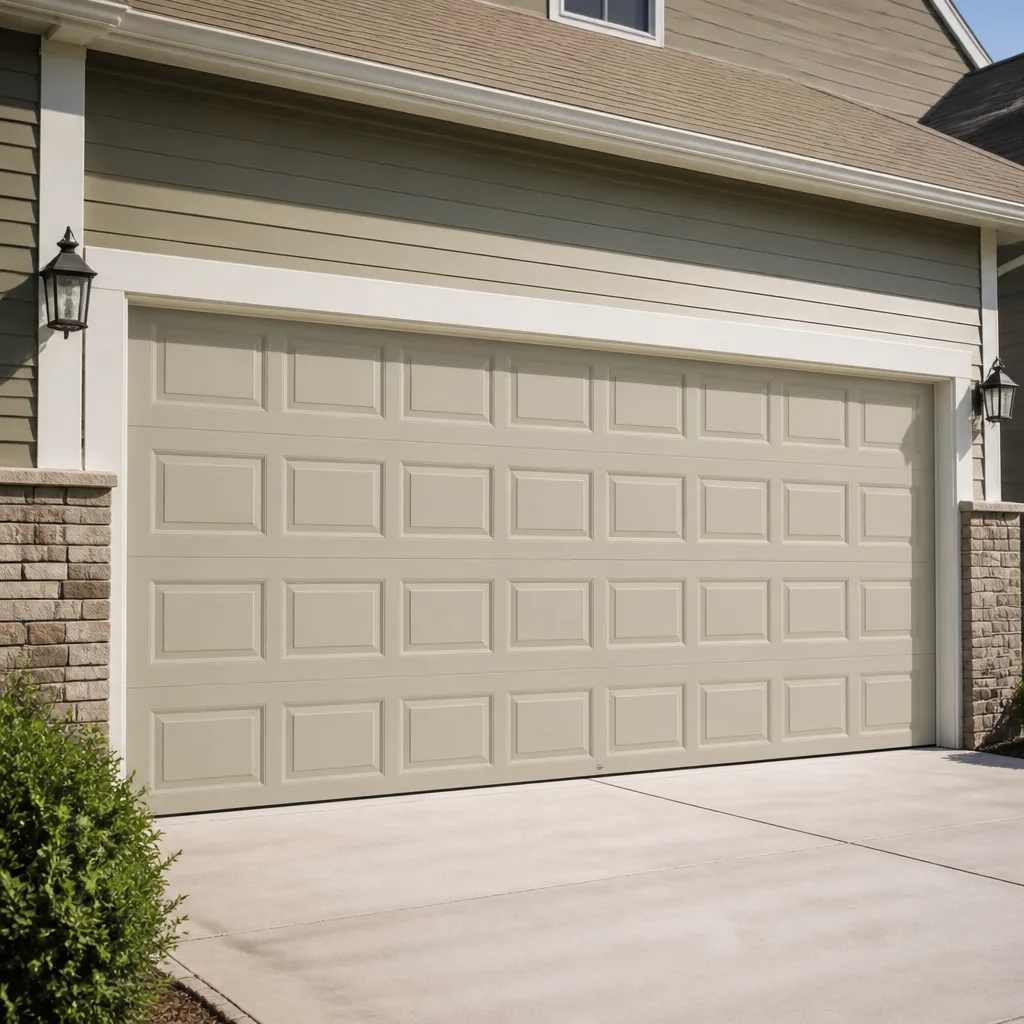 Raised-panel steel
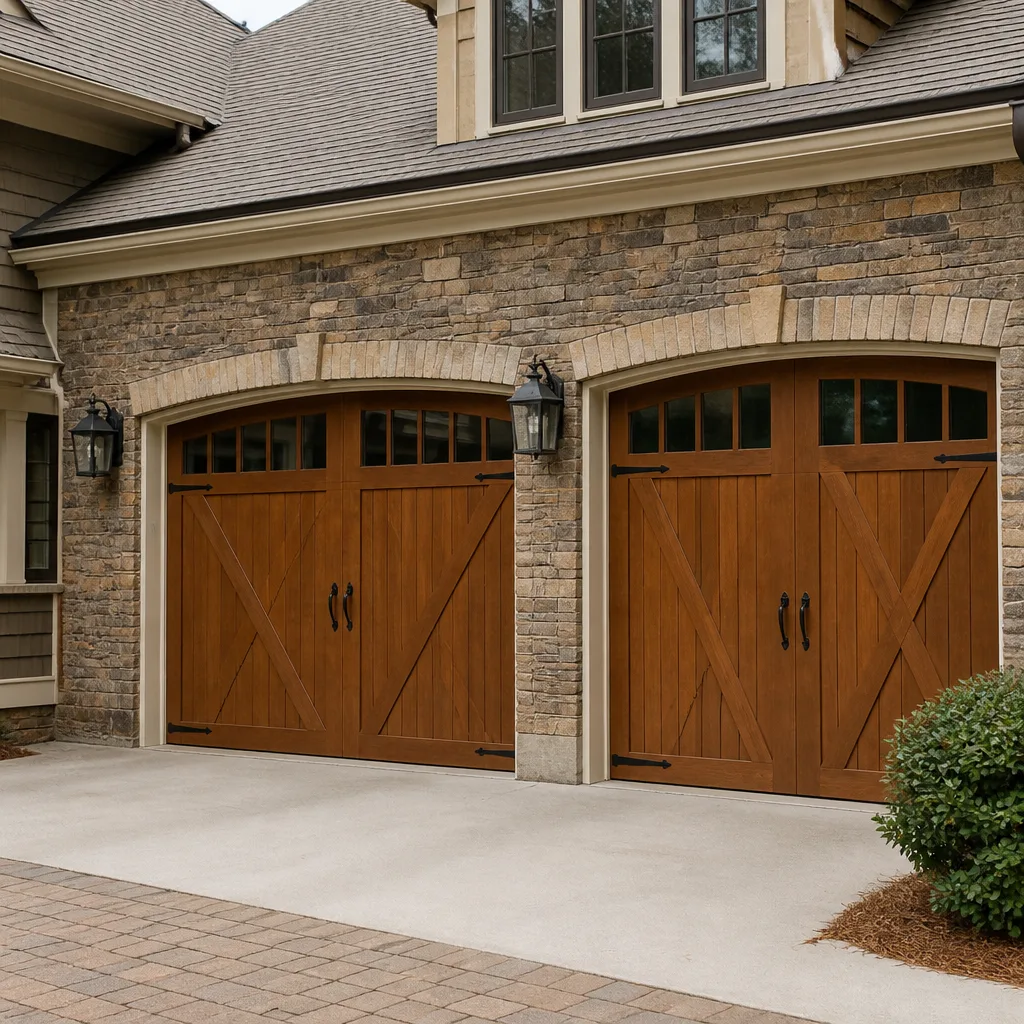 Carriage house
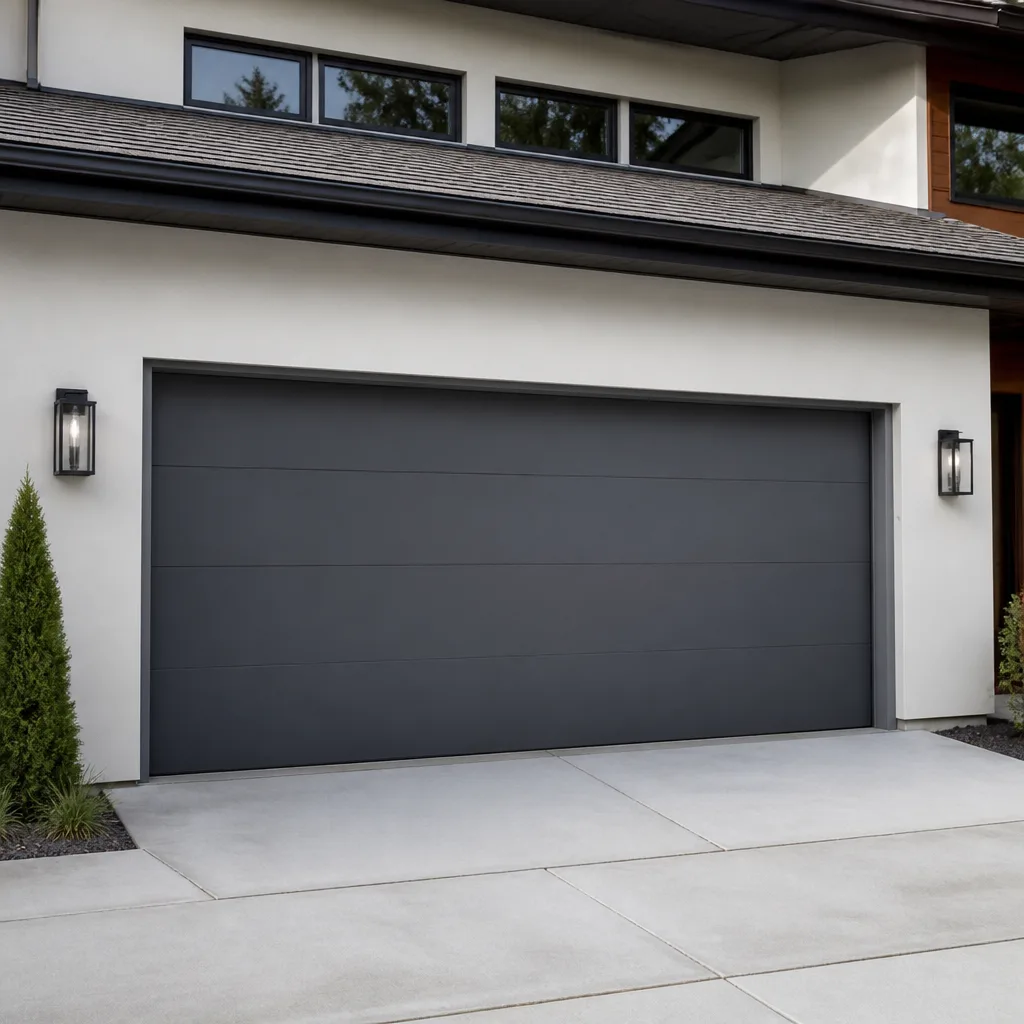 Modern flush
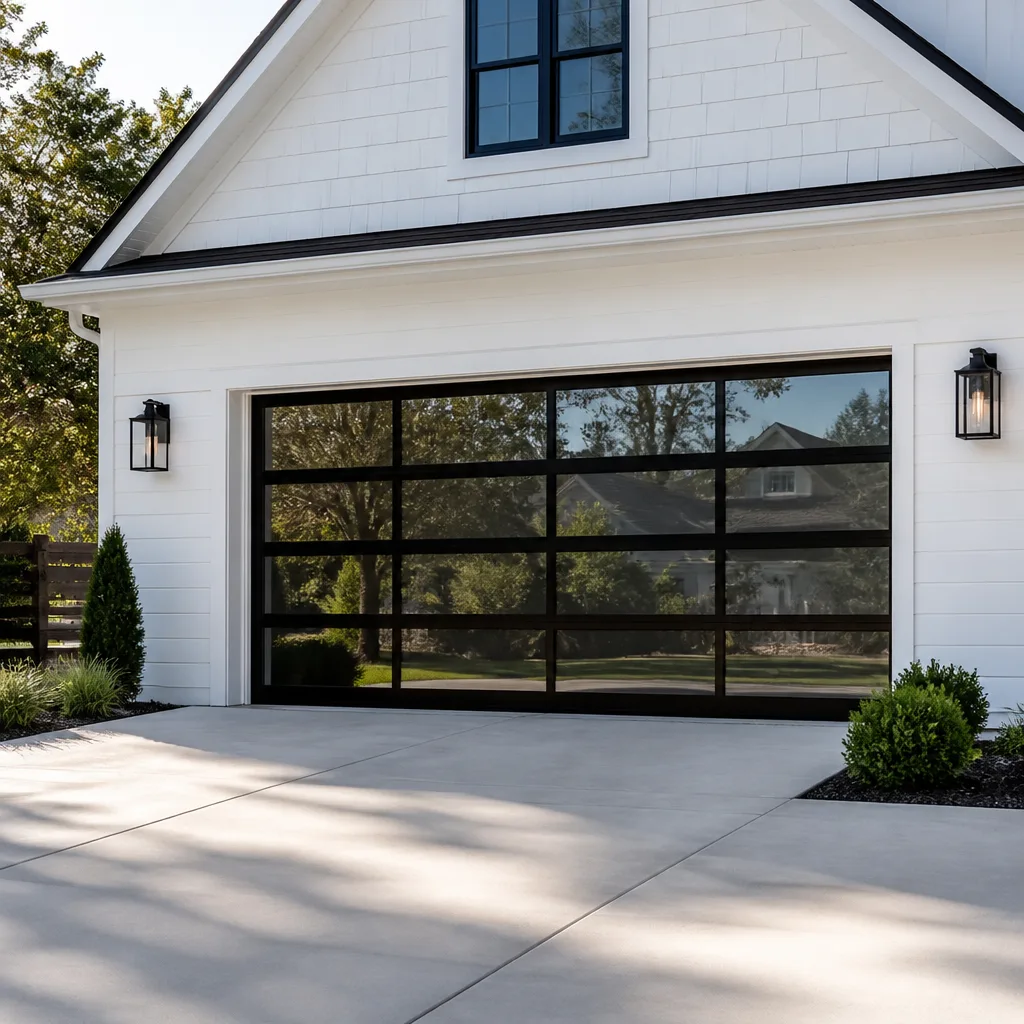 Full-view glass
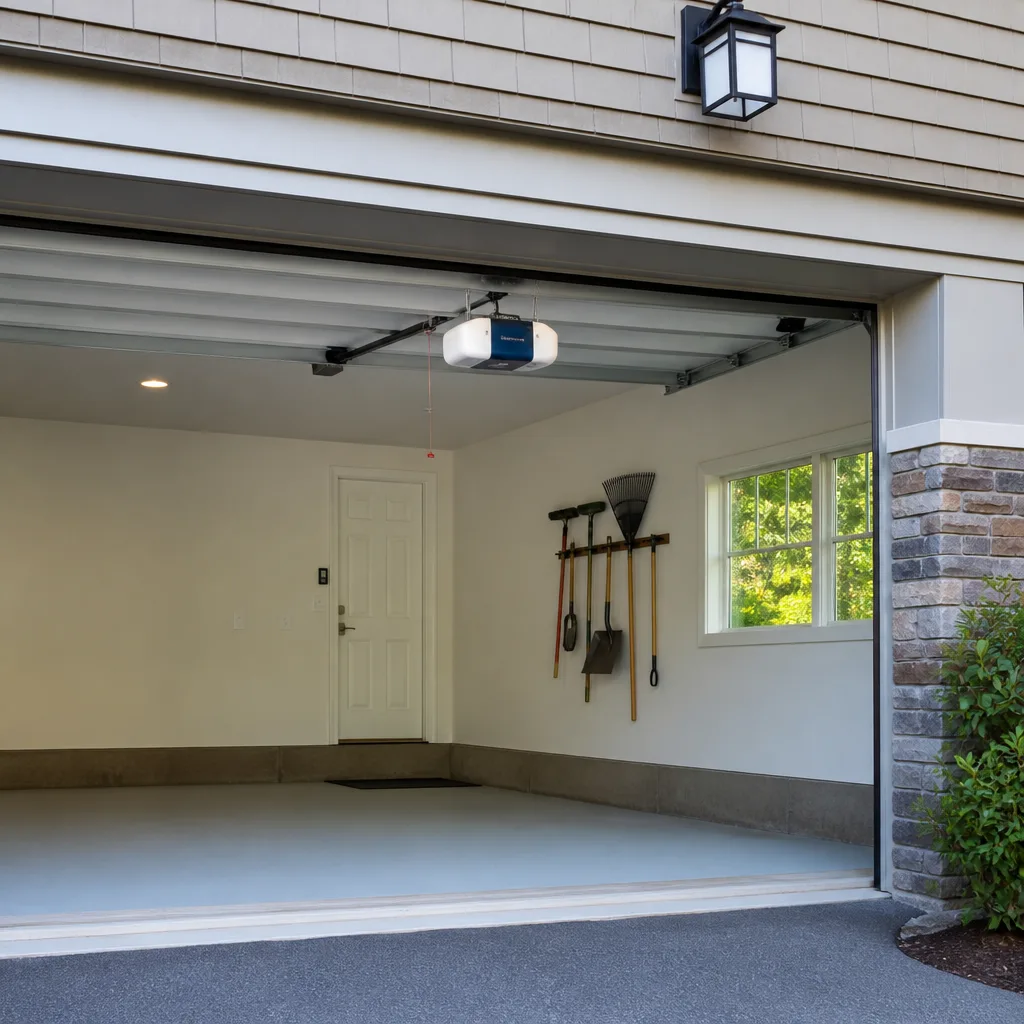
 LiftMaster openers
 Chamberlain openers
Full 25-point door and opener safety check with every visit - springs, cables, rollers, tracks, and your LiftMaster or Chamberlain opener included
You get a price before we start. It does not change when the truck arrives.
Get your free estimateGarage Door Warning Signs: A Glendora Homeowner’s Reference Guide
Most garage door articles hand you a list of symptoms and leave you to guess which ones matter. That’s backwards. The door over your car is the largest moving object in your Glendora home, and it cycles hundreds of times a month through dust, heat, and the occasional Santa Ana wind gust. This guide ranks every common warning sign by how fast you need to act, explains the mechanical cause behind each one, and gives you a 30-second test to separate door problems from opener problems. For seasonal garage door care in Glendora, see our year-round homeowner’s guide. No guesswork, no scare tactics, just the diagnosis a technician would give you.
Quick Answer
The warning signs that demand same-day attention in Glendora are a broken or visibly separating torsion spring, frayed or kinked lift cables, and a door that drops hard when you pull the manual release. Sounds like metal grinding point to worn rollers or bearings, while popping or squealing come from the spring assembly and opener drive respectively. If your door is slow but still moving, don’t wait: that gradual slowdown usually means the opener motor is overloading against a failing balance system, and running it daily can burn out a LiftMaster or Chamberlain drive from the inside within a few months.
Styles & brands we work with
- Raised-panel steel
- Carriage house
- Modern flush
- Full-view glass
- LiftMaster openers
- Chamberlain openers
Table of Contents
- The Urgency Triage: Fix Today, Fix This Month, Watch It
- What That Sound Actually Means: Grinding, Popping, and Squealing
- The 30-Second Test That Tells You If It’s the Door or the Opener
- How to Read Your Torsion Spring: The Gap and Coil Tell
- Why a Slow Door Is the Most Expensive Warning Sign You Can Ignore
- A Door That Reverses Before It Hits the Ground Is Not a Sensor Problem
- Cables and Rollers: What Normal Wear Looks Like in a Glendora Garage
- Common Mistakes to Avoid
The Urgency Triage: Fix Today, Fix This Month, Watch It
Not every garage door symptom is an emergency. Some demand a call before you park the car inside for the night. Others can wait until your next payday. Here’s the ranking we use when a Glendora homeowner describes a problem over the phone, and it’s the same framework our technicians apply when they arrive. If you’re planning a bigger project, our step-by-step guide to hiring a garage door contractor in Glendora walks you through vetting and selection.
Fix today. A broken torsion spring is the non-negotiable one. When a spring snaps, the door becomes a dead load of 150 to 400 pounds with nothing counterbalancing it. If you try to open it manually, or if the opener strains against it, you risk the door falling, the cables whipping, or the opener stripping its gears. A frayed lift cable falls in the same category: that cable is under tension, and when it strands start separating, the remaining strands are holding more than their rated load. One hard cycle and it goes. Also on the today list: a door that drops more than a foot when you pull the manual release. That means the spring is no longer counterbalancing properly, even if you can’t see a break.
Fix this month. Worn rollers, noisy hinges, and a door that’s drifting out of balance by an inch or two all fall here. These are mechanical wear items. They fail slowly, and you have a window to schedule the repair before anything catastrophic happens. The catch is that “this month” means actually scheduling it. In our experience, the homeowners who call us with a snapped cable or a burned-out opener almost always describe a warning sign they noticed weeks or months earlier but put on the mental back burner.
Watch it. Minor surface rust on the track, a slightly loose handle, a weather seal that’s beginning to crack. These are cosmetic or slowly progressive, and they don’t threaten the safety of the door or the lifespan of the opener. Note them, keep an eye on them, and mention them when you have a technician out for something else. A qualified repair visit typically catches these before they escalate into same-day emergencies.
What That Sound Actually Means: Grinding, Popping, and Squealing
Garage doors talk. Homeowners consistently confuse the three most common sounds, and that confusion leads to wasted service calls or, worse, ignored warnings. Here’s the map.
Metal-on-metal grinding is almost always the rollers. In most Glendora garages, the rollers are either steel or nylon with steel bearings, riding in a steel track. When the bearings wear out, the roller stops spinning and starts sliding. That’s the grind. It gets louder as the door passes through the curved section of track, because that’s where the resistance is highest. The fix is replacing the rollers, not lubricating the track. Grease on a garage door track is a mistake anyway: it collects grit and makes the problem worse, and in a dry climate like ours, that grit becomes grinding paste within weeks.
Popping or banging comes from the spring assembly. Torsion springs store enormous mechanical energy, and as they age, the coils can bind and release as the door moves. A sharp pop when the door reaches the top or bottom of its travel often means the spring is settling on the shaft, or a coil is catching on the center bearing. It’s not always an emergency, but it warrants a closer look at the spring and the bearing plate. If the popping becomes a loud bang that you can feel through the wall, treat it as a spring failure in progress.
Squealing or whining points to the opener drive. Chain-drive openers from LiftMaster and Chamberlain develop a dry metallic whine as the chain stretches and the sprocket wears. Belt-drive openers from the same brands usually stay quieter, but a squeal can indicate a worn idler pulley or a dry belt. Screw-drive Genie units have their own signature: a groaning sound from the rail when the lubricant has broken down. Each of these is opener-specific, and a technician who works across brands knows which sound maps to which drive without opening the unit. If you’re in Glendora and not sure what you’re hearing, call and describe it: thirty seconds on the phone can usually save you a service charge.
The 30-Second Test That Tells You If It’s the Door or the Opener
This test is the single most useful diagnostic tool a homeowner can have, and it costs nothing. It takes thirty seconds and tells you whether your problem is the door itself or the opener that drives it.
- Close the door completely.
- Pull the manual release handle, usually a red cord hanging from the opener rail. This disconnects the opener carriage from the door.
- Lift the door by hand using the handle on the bottom panel.
- Pay attention to how it feels.
If the door lifts smoothly with moderate effort and stays put at the halfway point when you release it, the door and springs are balanced. In that case, any problem you’re experiencing is on the opener side: force settings, travel limits, drive train, or motor. If the door feels heavy, won’t stay up, or drops hard when you release it, the problem is the door balance, which in practice means the torsion springs or extension springs. No amount of opener adjustment will compensate for a door that’s not balanced. The opener motor is sized to move a balanced door. When it’s forced to do the counterbalancing work the spring is supposed to do, it burns itself out, which is how a $500 spring replacement becomes a $700 opener replacement on top.
If you can’t lift the door at all, or if it’s erratic, stop and call a professional. A door that’s fighting you is a door with a stored-energy problem.
This test separates the two systems. After that, you know where to focus: Garage Door Opener Repair in Glendora for opener issues, or the door side for spring and cable work. Knowing which is which saves you time and prevents paying for someone to diagnose the wrong system.
How to Read Your Torsion Spring: The Gap and Coil Tell
Torsion springs don’t fail without warning. The warning is written into the metal itself, visible to anyone who knows what to look for, and it’s one of the few things on a garage door you can diagnose visually without touching anything dangerous.
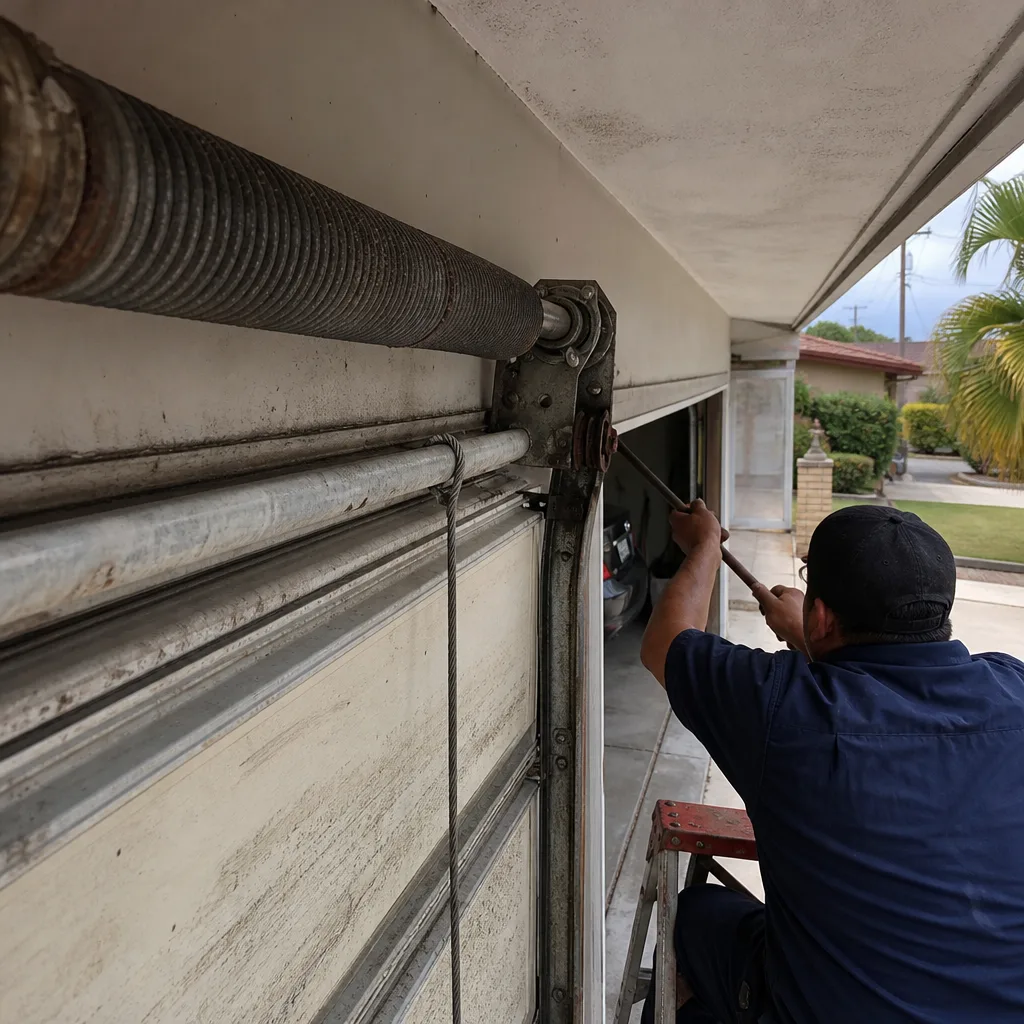
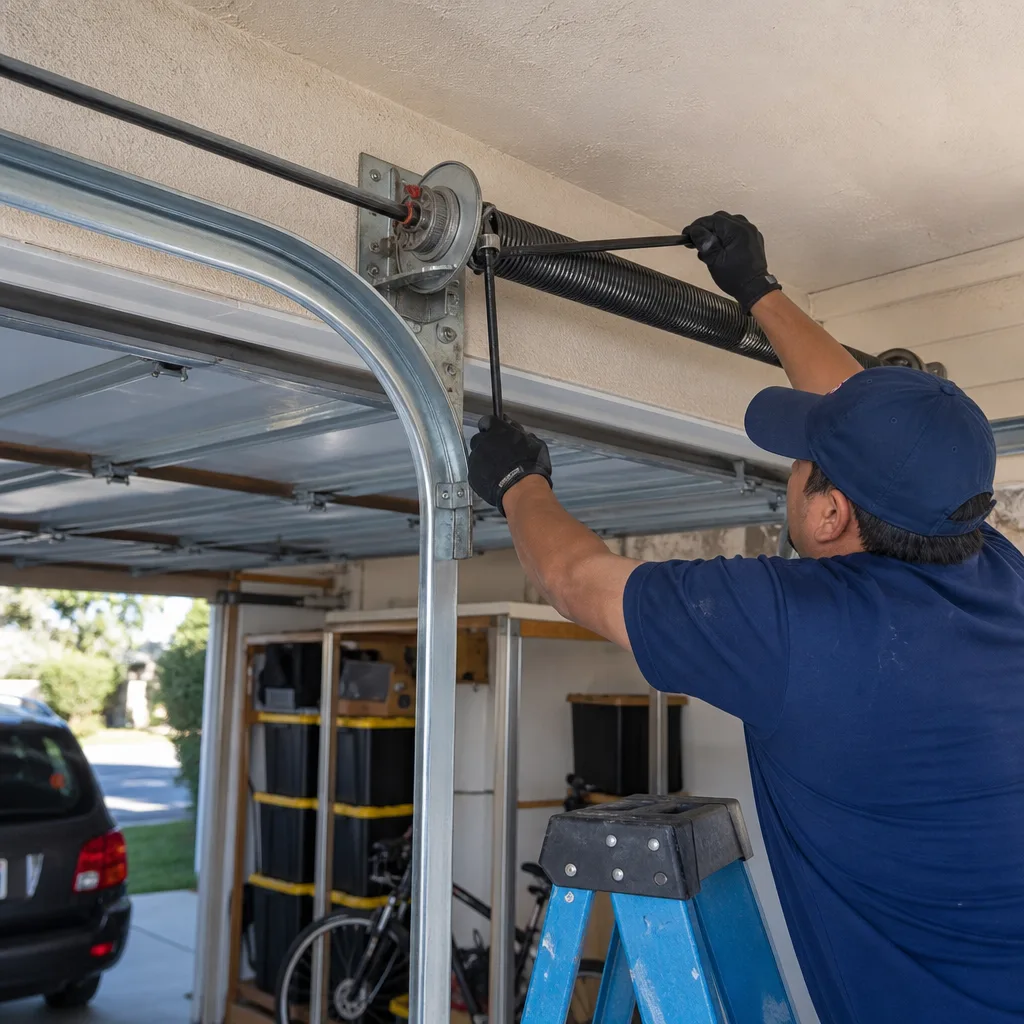
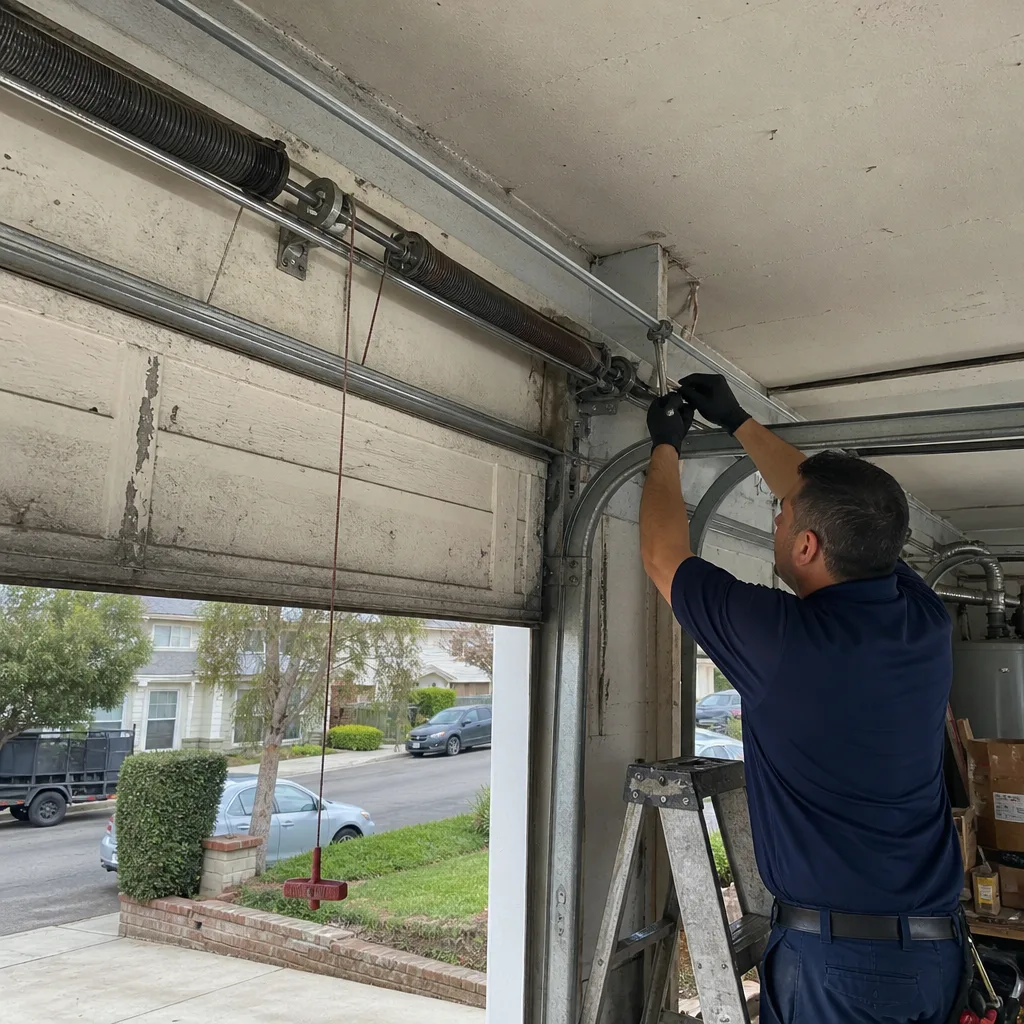
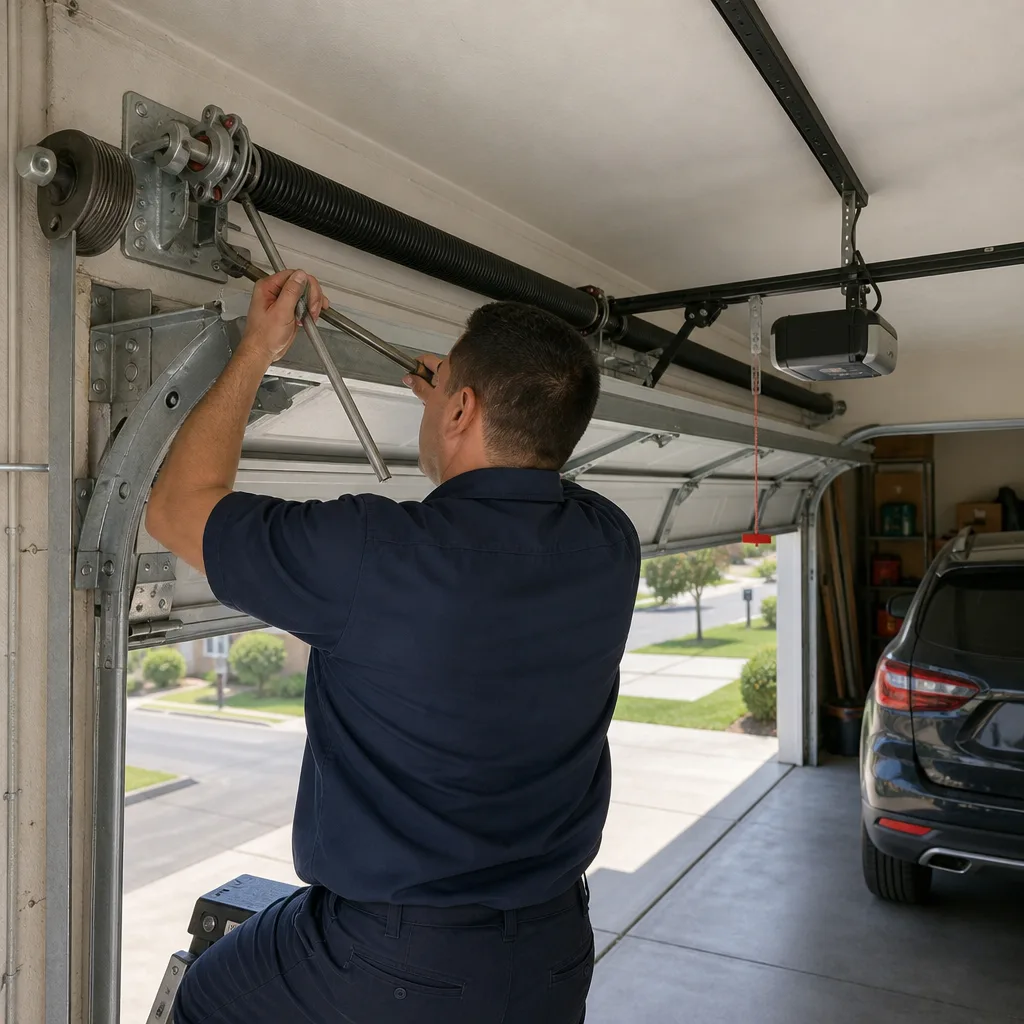
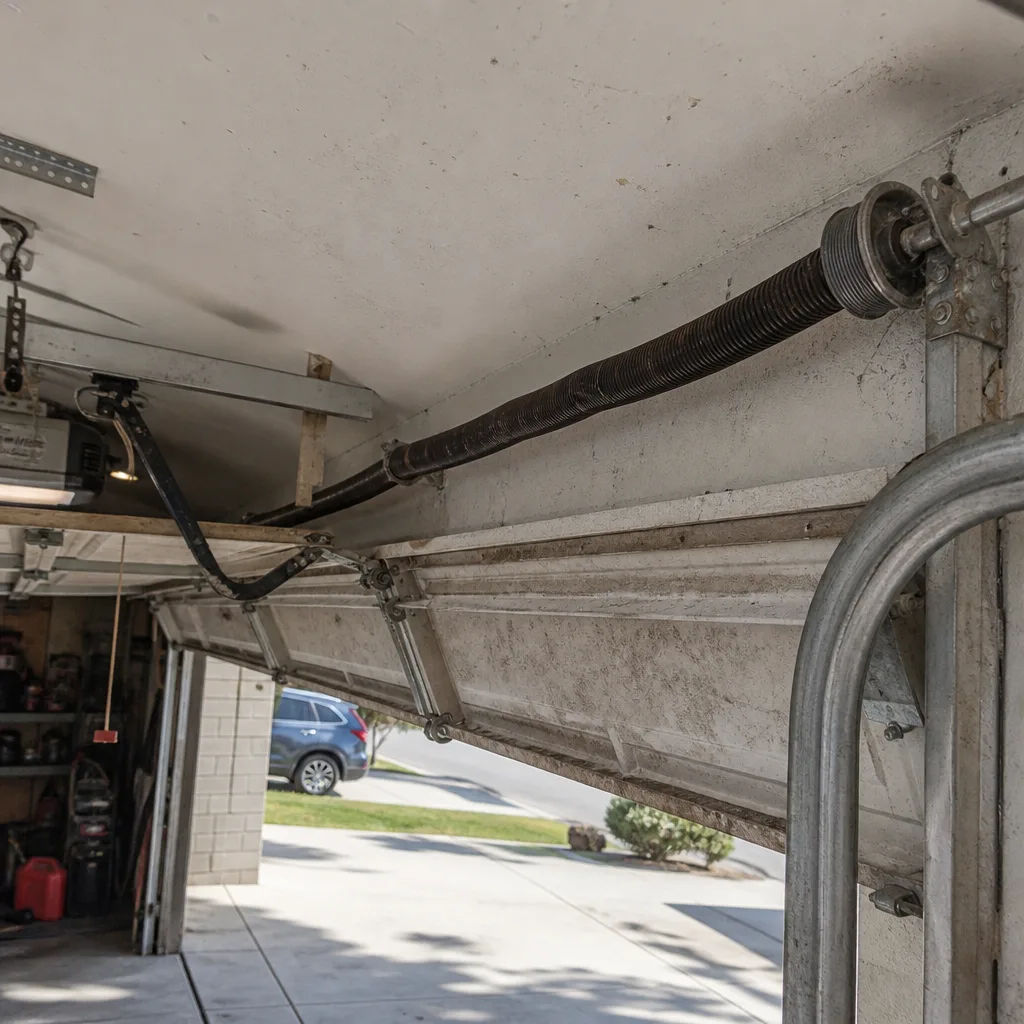
Look at the spring mounted on the metal shaft above your closed door. A healthy torsion spring is a continuous, evenly spaced coil. Now look for two things. First, a visible gap between coils: on a standard spring, a gap wider than about 1/8 inch between adjacent coils, especially near the center of the spring, means the spring has started to fatigue. Second, coil separation at the winding cone, where the spring meets the cast metal fitting at the end. If coils look pulled apart there, or if the spring looks like it’s leaning slightly on the shaft, you’re looking at a spring within weeks of failure.
These gaps appear because torsion springs work by twisting, and over thousands of cycles, the metal accumulates microscopic fractures. The coil separation is the visible part of that process. In a Glendora garage that sees thirty degree temperature swings between summer mid-days and winter nights, the steel cycles through thermal expansion daily, and that accelerates fatigue in older springs.
Don’t touch the spring. Don’t try to measure the gap with metal calipers held in your hand. Take a photo with your phone and zoom in. If you see coil separation, call for service. The spring has perhaps a few hundred cycles left, which is days to weeks of normal use. And when it goes, it doesn’t announce itself politely. It’s a violent event that can damage the door, the track, and anything stored directly below.
Our spring replacement work at Garage Door Repair in Glendora covers spring brands across the line, from the standard units on Wayne Dalton doors to the beefier springs on Clopay and Amarr. The diagnosis is what matters first.
Why a Slow Door Is the Most Expensive Warning Sign You Can Ignore
A garage door that’s slower than it used to be is the one symptom homeowners consistently underweight. It still opens. It still closes. It’s just a little sluggish. They assume age, or cold weather, or the opener being cheap. What’s actually happening is that the door is going out of balance, and the opener motor is picking up the slack.
Here’s the chain of failure. Torsion springs lose tension over time as their internal structure changes. The door gets heavier, not lighter, as the spring does less of its job. The opener, which was sized for a balanced door, now pulls a heavier load every cycle. Inside a LiftMaster or Chamberlain unit, the drive gear and motor windings designed for a certain operating temperature start running hotter. Heat degrades the plastic drive gear, the motor capacitor, and eventually the windings themselves. Every slow cycle shaves life off the opener.
By the time the door is noticeably slow to you, the imbalance has usually been building for months. The repair is often as simple as adjusting the spring tension, a thirty-minute job. If instead the opener burns out, you’re into a full opener replacement, and you still have the spring problem to fix. That’s the expensive version.
If your door takes noticeably longer than it did when it was installed, don’t wait for it to stop. It won’t fail politely. It will fail mid-cycle, typically the morning you’re late for work. And a door stuck in the open position, in a Glendora summer, is a door you can’t close manually without a functioning spring. Garage Door Service Glendora home explains what a full diagnosis covers, but the short version is this: slow means springs, and springs are cheap compared to openers.
A Door That Reverses Before It Hits the Ground Is Not a Sensor Problem
This is the most common misdiagnosis in the garage door world. A door that starts closing, then reverses to open, and the homeowner’s first thought is “photo-eye sensor.” They wipe the lenses, align the little green lights, maybe replace the batteries, and the door still reverses. Here’s the truth from a technician’s perspective: in most cases, it’s not the sensor at all.
The photo-eye system is a simple safety circuit. If the lens is dirty or misaligned, or if something crosses the beam, the door won’t close. But if the sensor lights are steady and the beam is clear, the door reversing mid-travel is almost always a force-setting issue. The opener’s control board measures the resistance the motor encounters as it pushes the door down. If that resistance exceeds a preset threshold, the board interprets it as an obstruction and reverses. The fix is recalibrating the up and down force settings.
On a Chamberlain or LiftMaster opener, that calibration takes about four minutes and requires no tools beyond a ladder and a small screwdriver or a control-panel navigation. The challenge is that force settings drift. They’re affected by temperature, spring condition, rail lubrication, and door balance. A door that was fine in March can start reversing in May because the balance shifted slightly, the motor’s load went up, and the board crossed its limit.
Before you call anyone, check the photo-eye: lenses clean, lights steady, no boxes stacked in front of them. If those are good and the door still reverses, you have a force-setting or balance problem. That’s a thirty-minute service call for a technician who works on LiftMaster, Genie, and Chamberlain units daily. Throwing parts at it, replacing a perfectly good sensor, or worse, disabling the force setting entirely, creates a safety hazard. Don’t do that.
Cables and Rollers: What Normal Wear Looks Like in a Glendora Garage
Lift cables and rollers wear differently in different climates, and Glendora’s dry heat has a specific effect. Here’s what to look for on the mechanical side of your door.
Lift cables. These are the steel cables running up both sides of the door, connecting the bottom bracket to the drum at each end of the spring shaft. In a humid climate, cables rust. In Glendora, they don’t rust as much, but they fray. The dry air pulls moisture out of the galvanized coating, and the repeated flexing around the drum works the strands loose. Look for fine whiskers of steel sticking out along the cable’s length, especially near the bottom bracket and the drum. One or two whiskers is early. A visible kink or a section where the cable looks fuzzy instead of smooth means replacement is due. A broken lift cable is a same-day repair because the door can rack sideways and pop out of the track when the remaining cable takes the entire load.
Rollers. Most doors use nylon rollers with steel bearings, or all-steel rollers on older units. In Glendora’s dry conditions, nylon roller bearings fail by cracking and crumbling rather than rusting. You’ll see black dust around the hinges and hear the grinding described above. Worn rollers should be replaced in sets, not one at a time. If you replace one, the others will fail within months because they share the same cycle count.
These are wear items with a finite service life, typically seven to ten years. If your door is past that age and you’re hearing grinding or seeing cable fuzz, consider having the whole mechanical side inspected in one visit. When it’s time to replace, our buyer’s guide for choosing the right garage door brand in Glendora covers the major manufacturers. It’s cheaper than three separate calls.
Common Mistakes to Avoid
- Lubricating a grinding door to quiet it down. If the rollers are worn, grease makes the grinding smoother and quieter for about a week, then the grit makes it worse. The bearing is already failed. Replace the roller.
- Oil on spring coils. Torsion springs don’t need lubrication between the coils. The coils are meant to bind and release in a specific way. Oiling them changes the friction characteristics and, on some spring designs, accelerates the binding that causes popping.
- Ignoring a door that’s slightly crooked. A door that hangs a little low on one side is usually a cable or spring issue, not a track issue. It only gets worse, and the side that drags wears the roller and hinge faster.
- Disabling the auto-reverse to force the door closed. The auto-reverse exists for a reason. Disabling the force setting or the photo-eye to get the door down leaves you with a door that can’t detect a child, pet, or car bumper under it. Fix the cause, not the safety system.
- Replacing the opener when the springs are the problem. If the door is heavy and the opener is struggling, a new opener won’t fix anything. The same imbalanced door will burn out the new motor. Diagnose the balance first.
- Waiting until the spring breaks to call. By the time a torsion spring snaps, you’re dealing with a same-day emergency, and the broken spring can cause secondary damage to cables, track, and the opener. The visual coil-separation check costs nothing and takes thirty seconds.
When to Call a Professional
Call a professional the moment you see a broken spring, a frayed cable, or a door that drops hard on the manual release. Those are safety hazards, not inconveniences. Also call if your door is grinding and you haven’t identified the source, if the door reverses mid-close despite clear sensors, or if it’s been getting slower for weeks. Any symptom that involves the torsion spring or lift cables is a job for a trained technician: the stored energy in those components is enough to cause serious injury. Garage Door Service Glendora offers free estimates in Glendora. Call (855) 382-3042 and describe the symptom. We’ll tell you whether it needs same-day attention or can wait.
See the difference
 Before
 After
 Before
 After
 Before
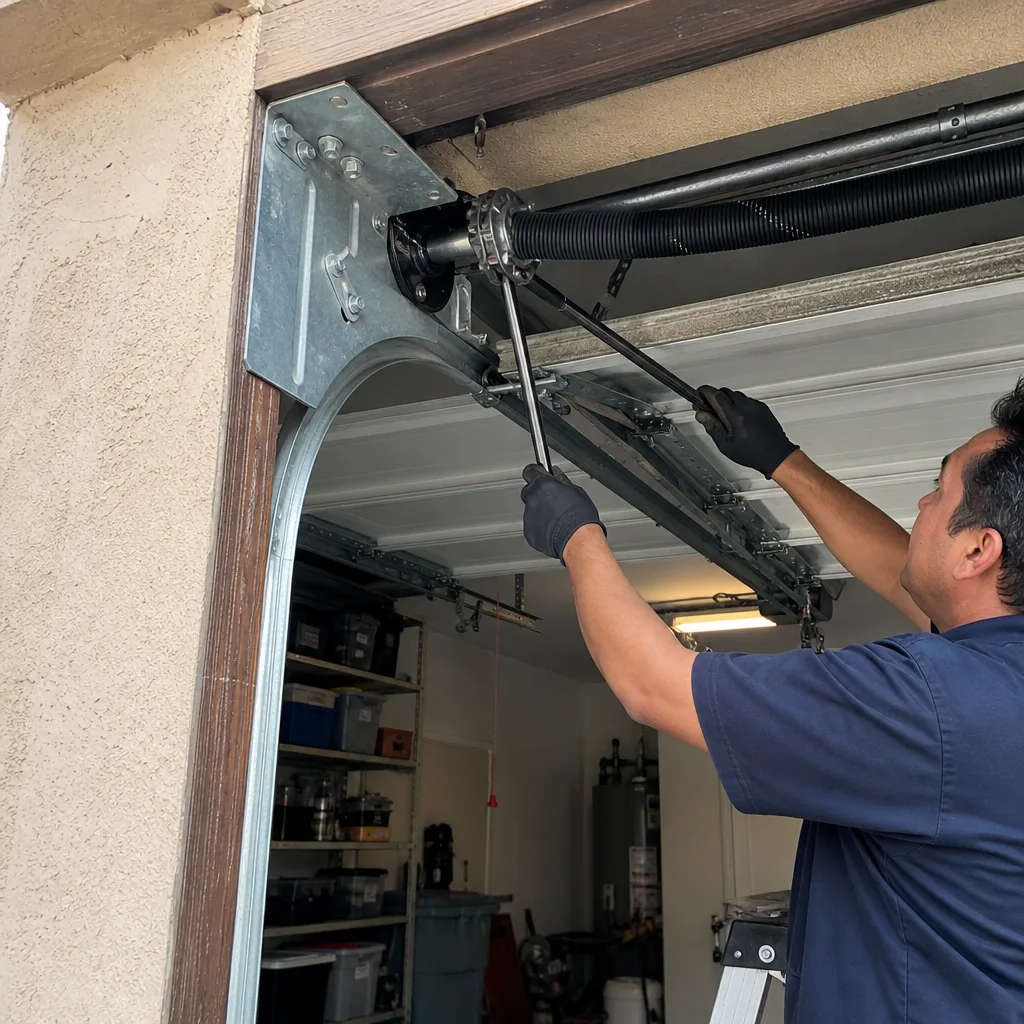 After
Frequently Asked Questions
Torsion spring fatigue, by a wide margin. The combination of daily use, wide daily temperature swings in the east San Gabriel Valley, and standard 10,000-cycle spring ratings means most Glendora doors experience a spring failure every seven to ten years. It’s mechanical wear, not a defect.
Look for a visible gap between the coils of the torsion spring, especially near the center or at the winding cone end. Coil separation wider than about 1/8 inch means the spring is in its final stretch. A healthy spring has tightly packed, evenly spaced coils. Also listen for popping sounds as the door moves.
No. Torsion springs are under enormous tension, and the winding process requires specialized bars and knowledge of the specific spring’s torque requirements. A mistake during winding can cause the bar to whip or the spring to release violently. This is always a professional job.
Most likely the opener’s force setting has drifted out of calibration, causing the control board to read normal resistance as an obstruction. It can also be the photo-eye sensor, but if the sensor lights are steady and the beam is clear, the force setting is the culprit.
Most repairs in Glendora run between $140 and $360 depending on the part and the labor involved. Spring replacement, the most common repair, typically lands in the $200 to $340 range. The price is quoted and agreed before any work starts. Call (855) 382-3042 for a free estimate.
If the door panels and track are structurally sound, repair is almost always the better value. A repair-first approach means diagnosing the actual failure and replacing only what’s worn. When panels are rusted through or the track is bent, then a full installation makes sense. For new doors, Garage Door Installation in Glendora covers the options.
Usually not. A slow door typically means the door is out of balance and the opener is working harder to move it. The fix is adjusting the spring tension, not replacing the opener. If you ignore the slow door, the opener can burn out, and then you’ll need both.
The Bottom Line
Garage doors fail on a predictable schedule, and the warning signs are readable if you know what to look for. A broken spring is an emergency. Frayed cables are an emergency. A slow door is a countdown. A door that reverses mid-travel is a ten-dollar calibration, not a sensor replacement. The key skill is separating door problems from opener problems, and the manual disconnect test gives you that answer in thirty seconds. When a symptom appears, diagnose it, then decide. And when the fix involves a torsion spring or lift cable, that’s where the phone comes out. For more guides & resources, visit our blog. Garage Door Service Glendora works on LiftMaster, Chamberlain, Genie, Clopay, and the rest of the major brands, with free estimates and repair-first diagnosis. Call (855) 382-3042 when you want a straight answer.
Written by the team at Garage Door Service Glendora, serving Glendora since 2014.