
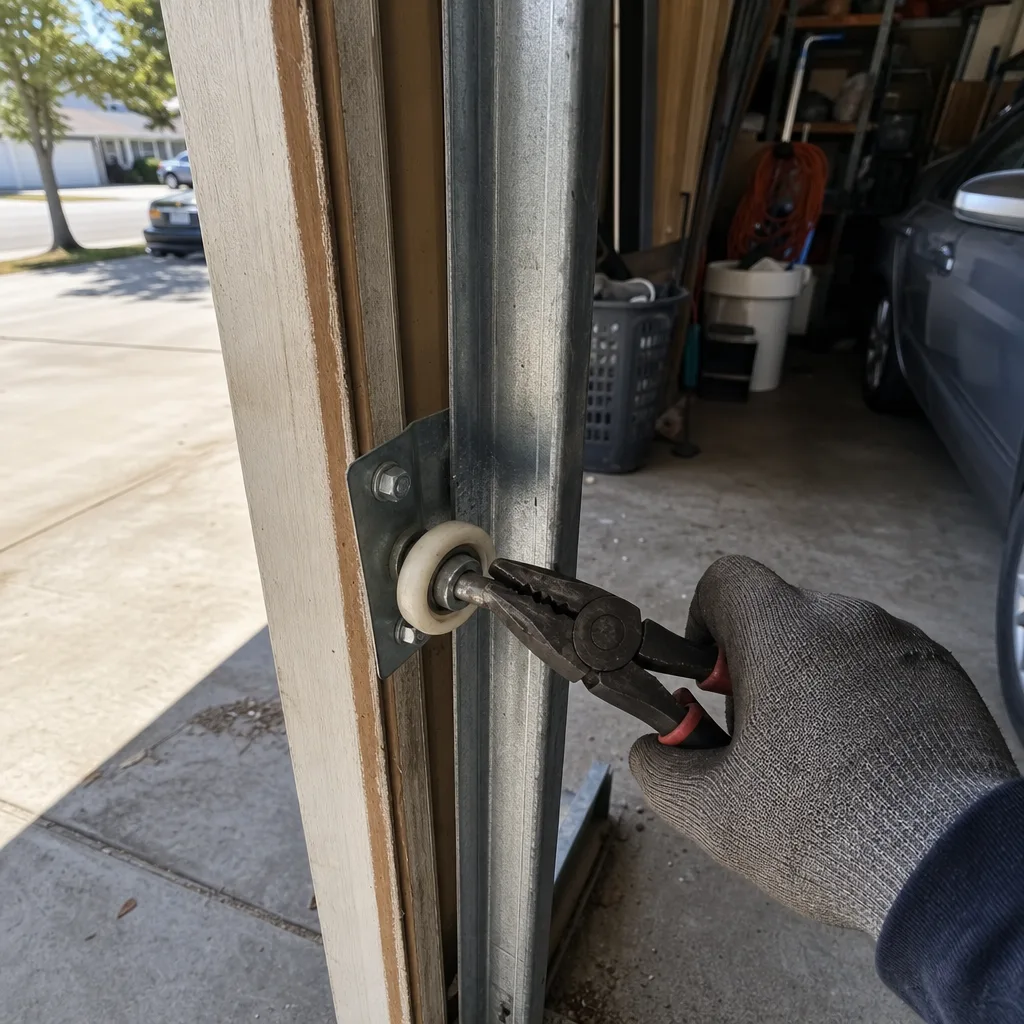
Last updated November 2, 2026
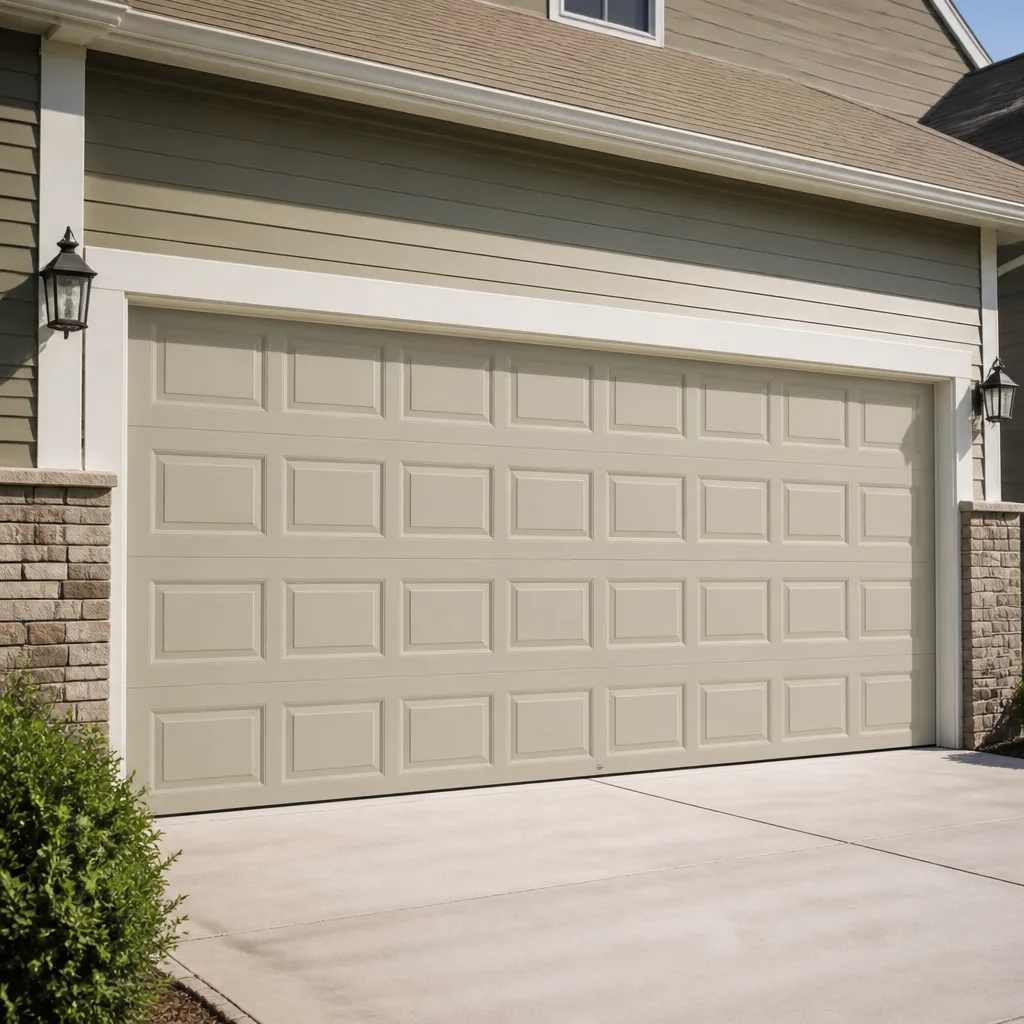 Raised-panel steel
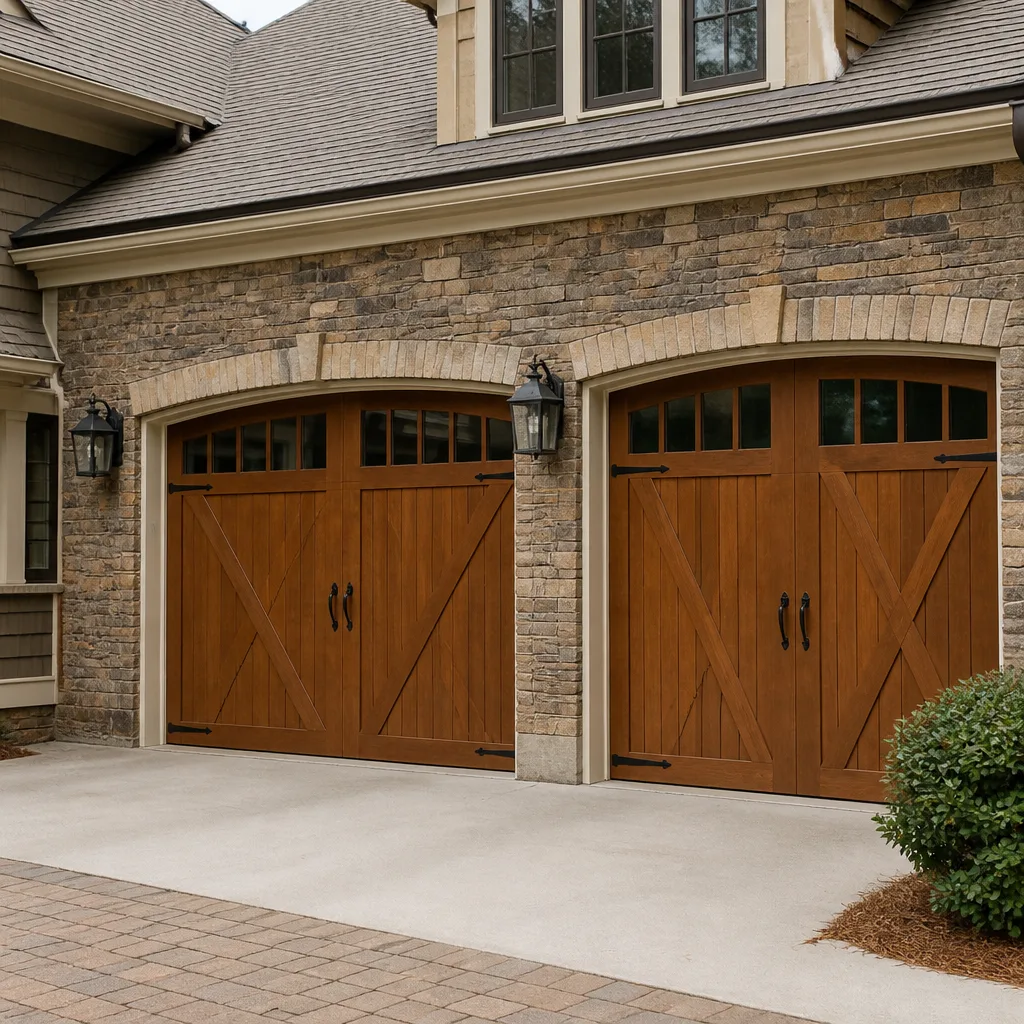 Carriage house
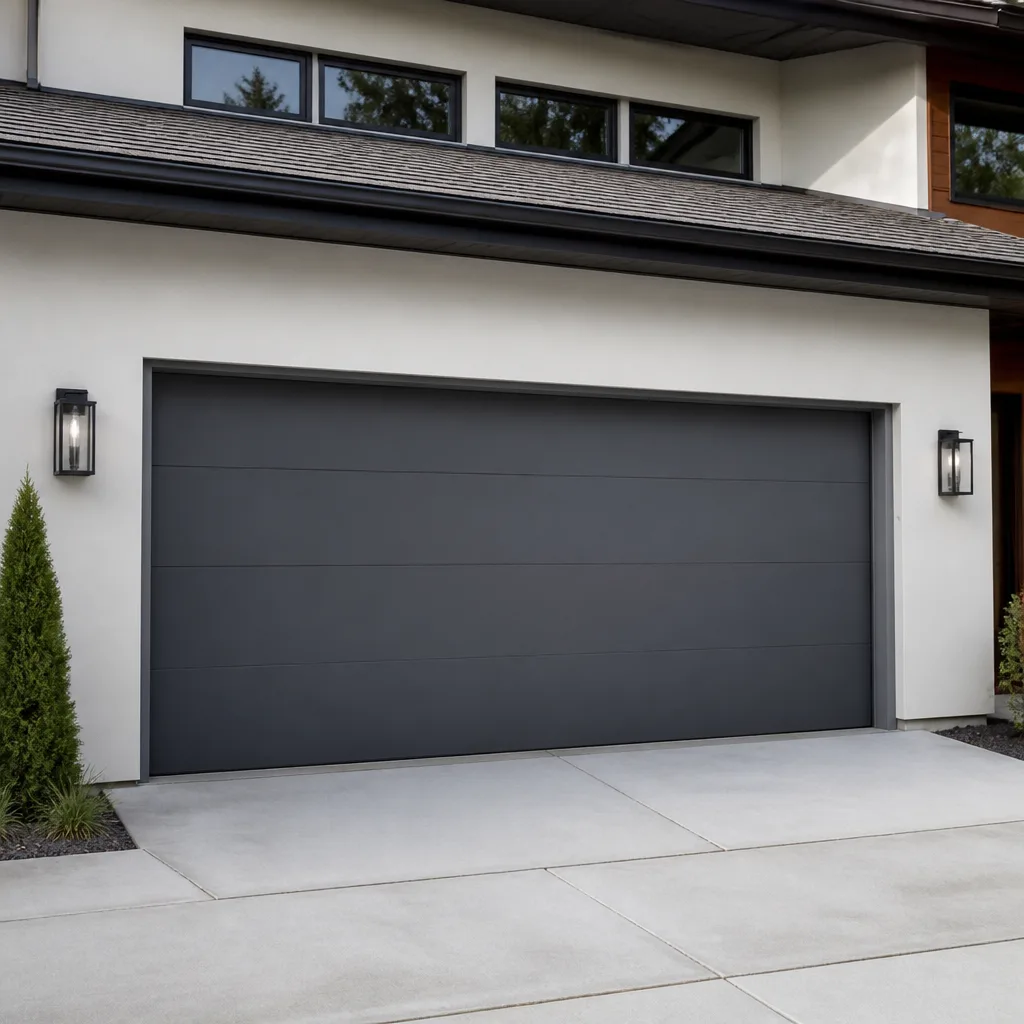 Modern flush
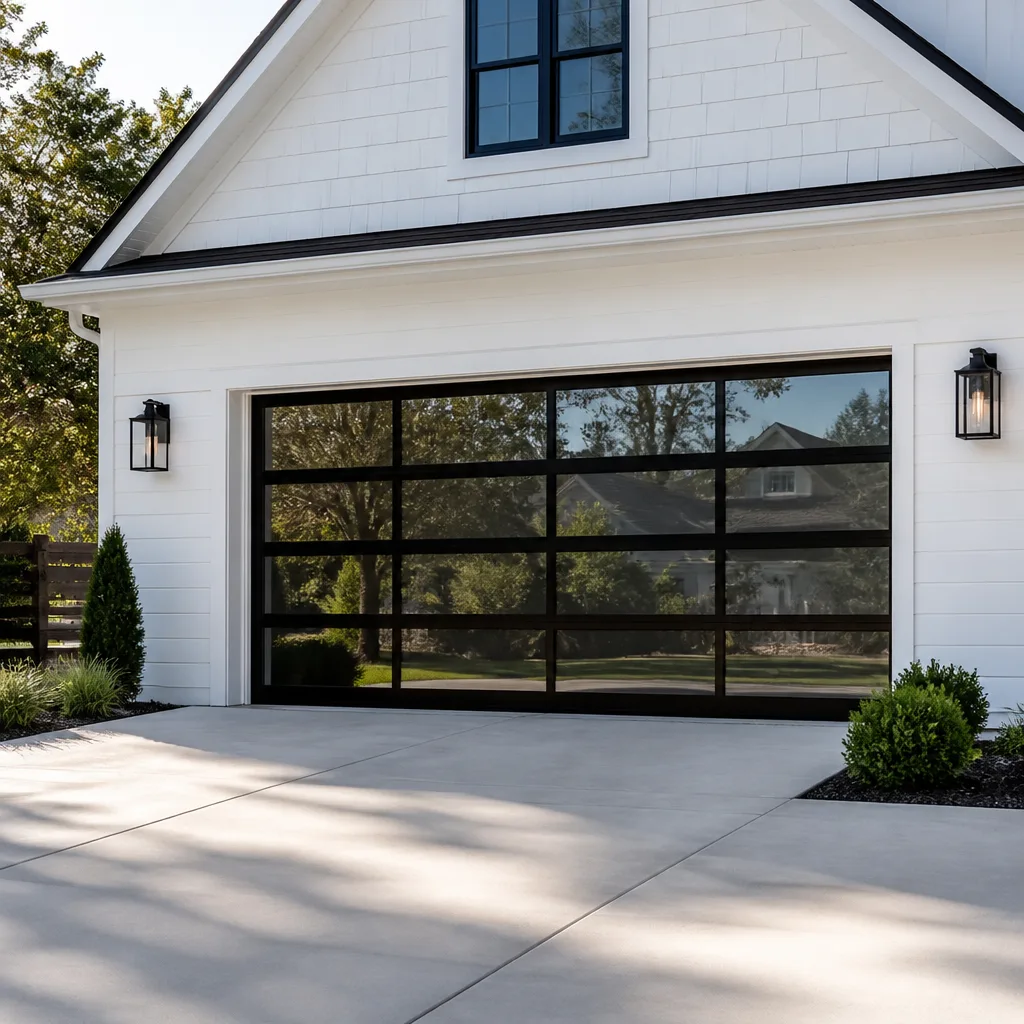 Full-view glass
 LiftMaster openers
 Chamberlain openers
Full 25-point door and opener safety check with every visit - springs, cables, rollers, tracks, and your LiftMaster or Chamberlain opener included
You get a price before we start. It does not change when the truck arrives.
Get your free estimateGarage Door Repair Maintenance Checklist for Glendora Homeowners
The single most common reason Glendora technicians get called out in October isn’t a broken spring. It’s a track that shifted over the summer because the concrete slab beneath the door frame settled in the heat, and nobody noticed until the door started grinding against the rail. The frustrating part is that this pattern repeats every year, and it’s almost always preventable with a plain, unglamorous maintenance routine. This guide walks through the specific checks that matter for homes in Glendora, where summer temperatures regularly pass 95°F and the red clay soil swells and contracts in ways that quietly knock garage door systems out of alignment. The checklist below reflects what we actually see on service calls here, not what a national brand’s marketing PDF suggests.
Styles & brands we work with
- Raised-panel steel
- Carriage house
- Modern flush
- Full-view glass
- LiftMaster openers
- Chamberlain openers
Quick Answer
A proper garage door maintenance checklist for Glendora homeowners includes inspecting the track alignment, testing the door balance, lubricating the rollers and hinges with a high-temperature-rated lubricant, checking the torsion spring coil gaps, testing the opener force setting, and replacing the bottom weatherstrip by year three. Run the full checklist twice a year, ideally in March and October, and you’ll catch most problems before they become emergency repair calls.
Table of Contents
- Why Glendora’s Climate Creates Unique Garage Door Problems
- The Twice-Yearly Walk-Around: What You’re Looking For
- Track Alignment Check: The October Service Call Preventer
- Torsion Spring Coil Gap Inspection: The Check Most Homeowners Skip
- Lubrication Schedule for Glendora’s Temperature Range
- Roller Wear Patterns and When Nylon Beats Steel
- Bottom Seal and Weatherstrip Degradation in Glendora UV
- Opener Force Setting Test: The Accurate Method
- Common Mistakes to Avoid
- When to Call a Professional
- Frequently Asked Questions
- The Bottom Line
Why Glendora’s Climate Creates Unique Garage Door Problems
Glendora sits at the base of the San Gabriel Mountains, and that geography does two things to garage doors. First, the summer heat pushes temperatures past 100°F for stretches of days, which expands metal tracks, degrades rubber seals faster than coastal climates, and turns cheap lubricants tacky. Second, the red clay soil that runs through much of the foothill neighborhoods expands when wet and contracts when dry. That soil movement is the quiet culprit behind most track misalignment and door balance problems in Glendora homes. A door that ran perfectly in January can be binding by August because the slab settled a quarter inch.
We see this pattern across neighborhoods from the older homes near downtown Glendora to newer builds up toward the foothills. Homes with east-facing garages get intense morning sun, which accelerates rubber breakdown on the bottom seal. Homes with west-facing garage doors bake in the afternoon, and the metal panel surface can hit temperatures that make touching it uncomfortable. These aren’t exotic conditions, but they do mean that generic maintenance advice written for a mild-climate city misses the point. You need to adjust your routine to the place you live, not follow a checklist from a national brand’s website.
The good news is that the fixes are straightforward. You need the right lubricant for high heat, you need to check track alignment against the actual floor, and you need to inspect the rubber components on a schedule that reflects our UV exposure. The rest of this guide breaks down each check with specifics. The overall approach is repair first: diagnose what’s happening before replacing anything, because most of what fails on a Glendora garage door is a maintenance issue, not a broken door.
The Twice-Yearly Walk-Around: What You’re Looking For
The foundation of the whole routine is a ten-minute visual inspection you run twice a year. March and October work well for Glendora because they bracket the two stress seasons: summer heat and winter rain. The walk-around doesn’t require tools, and it catches most of the problems that later turn into repair calls. Here’s the sequence we recommend, and it’s the same order our techs follow when they first arrive at a Garage Door Repair in Glendora job.
- Open the door halfway by hand. If the door drifts up or down more than a few inches on its own, the spring tension is off. A balanced door stays put when released at the halfway mark.
- Look at the track on both sides. The gap between the rail and the rollers should be consistent from bottom to top. If the roller is pinched at one point or has play at another, the track has shifted.
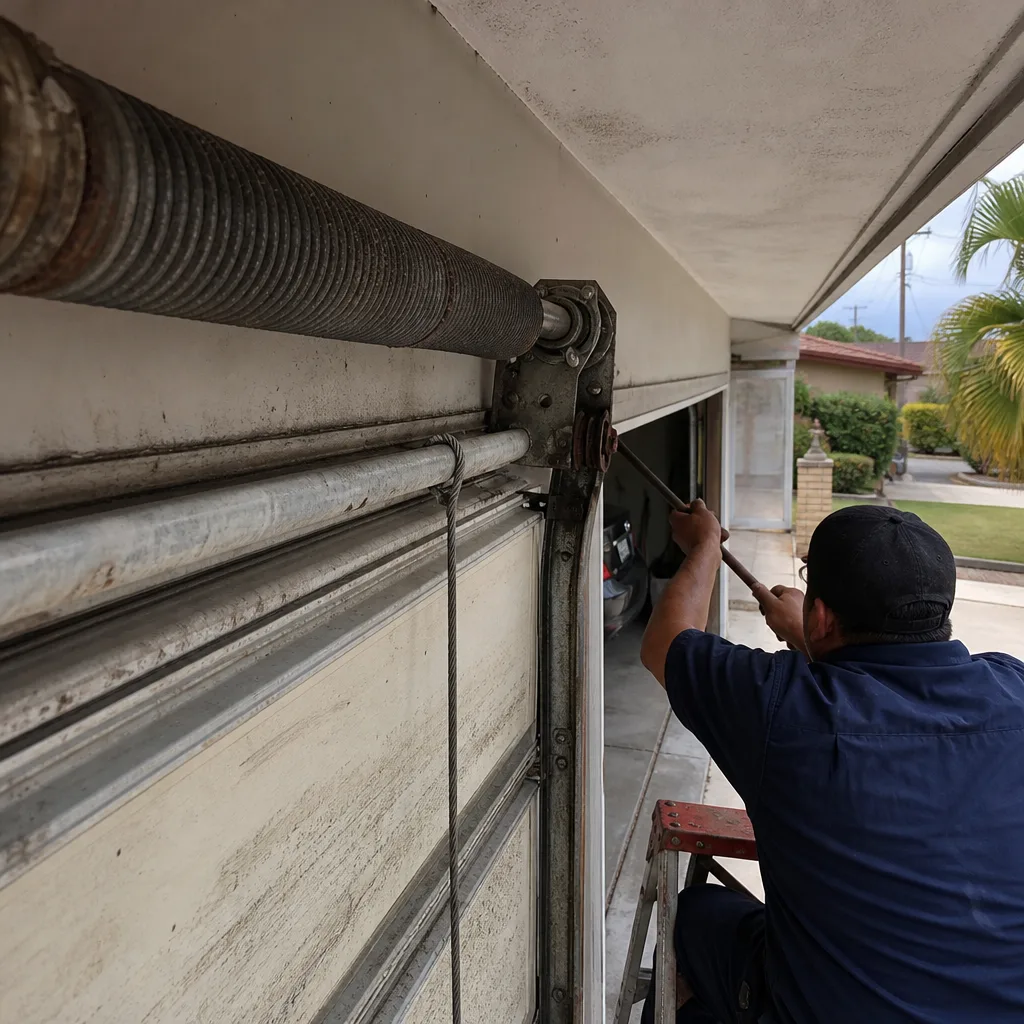
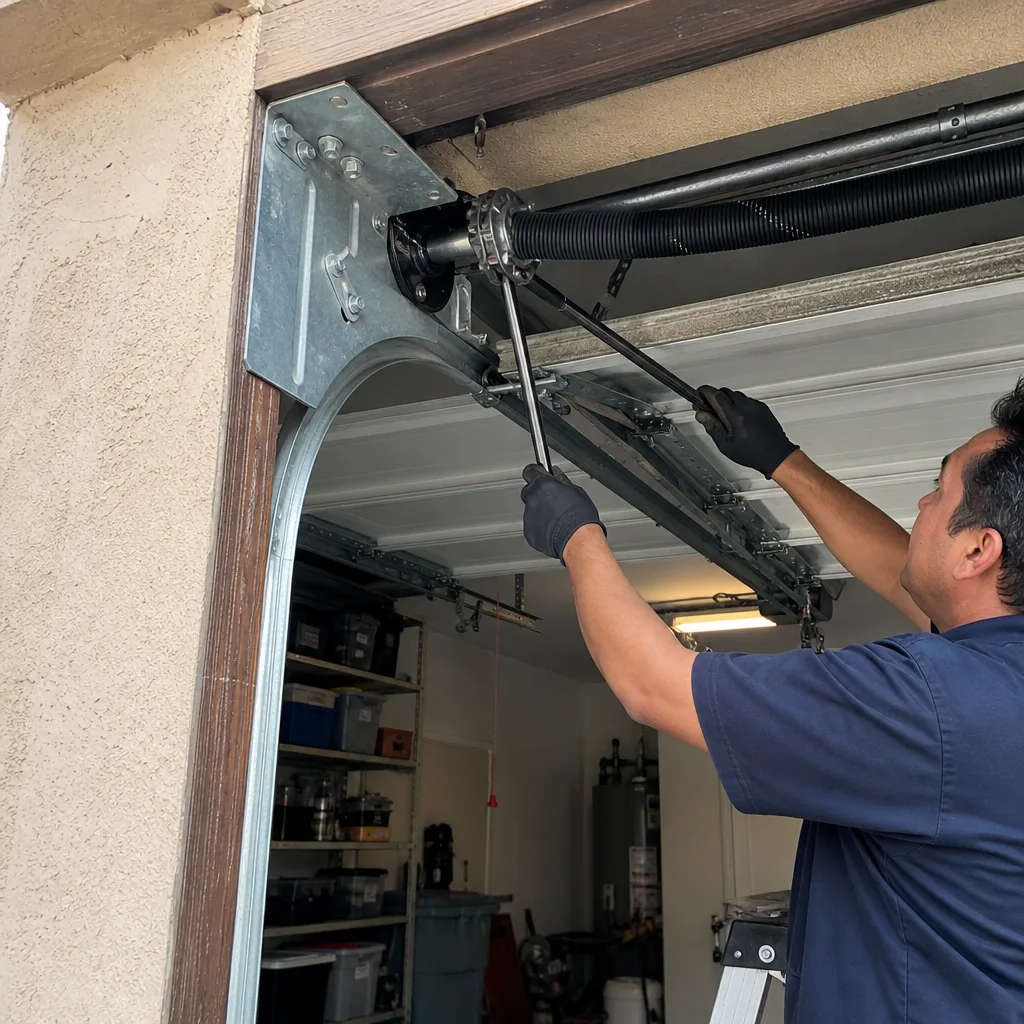
- Inspect the torsion spring above the closed door. Look at the gap between coils. On a healthy spring, the coils are tight and evenly spaced. A gap that opens up in one section means the spring is beginning to fail.
- Run your hand along the bottom seal. It should be pliable, not cracked or hard. If it flakes when you bend it, it’s done.
- Lift the door manually through its full travel. It should move smoothly with consistent resistance. Grinding, binding, or a chattering feel means rollers, hinges, or track alignment need attention.
- Watch and listen. Any new noise, vibration, or wobble in the panels is data. Don’t ignore it.
This walk-around takes ten minutes, and it’s the highest-return maintenance you can do on your whole house. The sections below go deeper on each check, including the specifics that matter in Glendora.
Track Alignment Check: The October Service Call Preventer
Track misalignment is the single most common issue we diagnose on Glendora service calls between September and November, and it almost always traces back to soil settlement over the summer. Here’s what’s happening: the garage slab is a separate concrete pour from the house foundation. In Glendora’s clay-heavy soil, the slab shifts slightly during the dry months as moisture leaves the ground. The track is bolted to the wall and the floor bracket, and when the floor moves even a fraction of an inch, the track bends or twists under the stress.
The result is a door that suddenly grinds on one side, runs loud, or hangs up when closing. Homeowners assume the door is broken. Nine times out of ten, it’s an alignment issue that needs the track loosened, repositioned, and re-torqued. It’s a quick fix for a technician, but it’s not a job most homeowners should attempt themselves. The track bolts are under tension.
What you can do is catch it early. During your walk-around, pay attention to the roller-to-track clearance on both sides. The roller should sit centered in the rail with roughly the same gap on both sides. If one side of the rail shows wear marks or the roller is riding hard against one edge, the track has moved. Also check the floor brackets at the base of each vertical track. If you see fresh cracks in the concrete around the bolt holes or the bracket has pulled away from the wall, that’s the signature of slab movement. Call for service before the stress cracks a roller or bends the track. As part of our full-scope garage door repair service, track realignment is one of the most common fixes we perform, and it’s usually resolved in a single visit.
Torsion Spring Coil Gap Inspection: The Check Most Homeowners Skip
The torsion spring is the component doing the heavy lifting. When the door opens, the spring stores energy. When it closes, the spring releases it. These springs are rated for a specific number of cycles, typically between 10,000 and 20,000 depending on the quality of the spring. A household that runs the door four times a day racks up about 1,500 cycles a year. That means a spring with a 10,000-cycle rating lasts roughly six to seven years. Multi-car households with two doors or heavy use can wear out a spring faster.
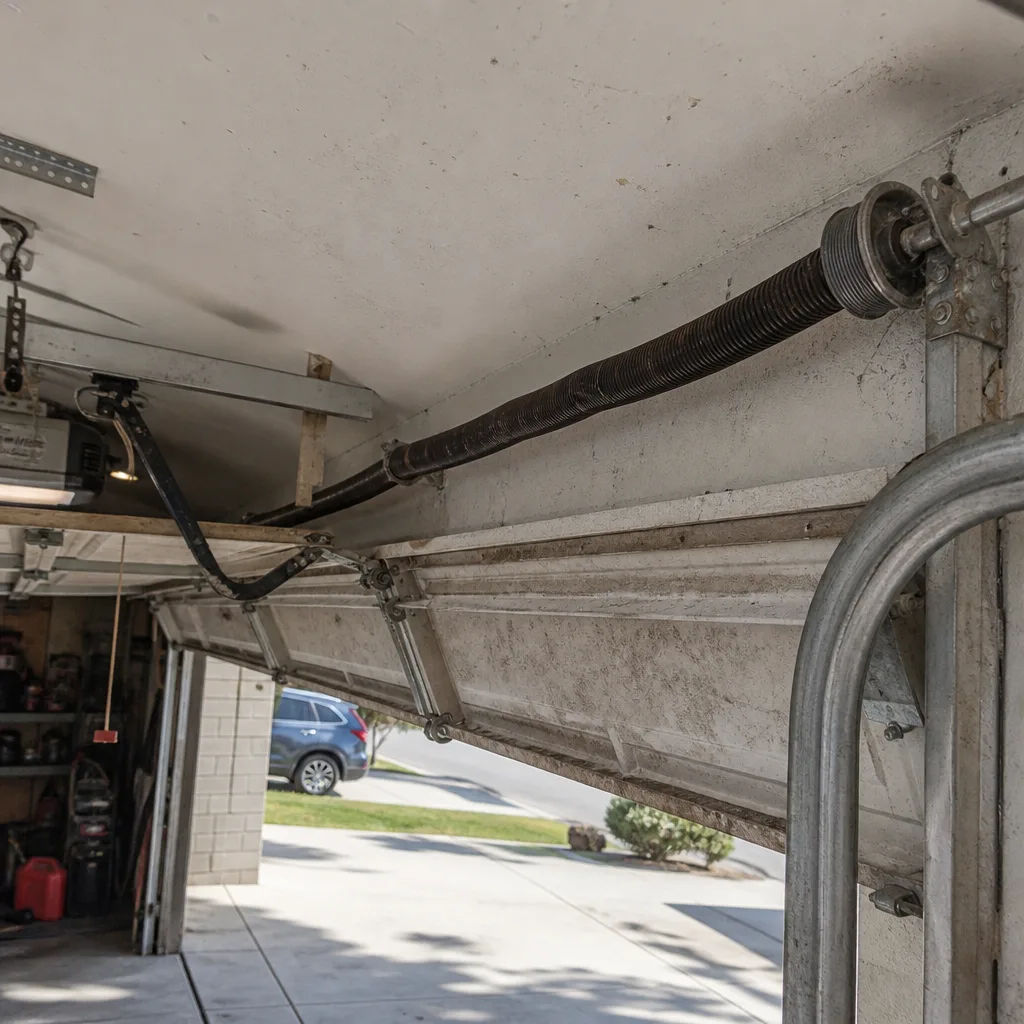
The early warning sign that a spring is approaching failure is the coil gap. A healthy torsion spring has coils that sit flush against one another. As the metal fatigues, individual coils begin to separate. The gap starts small, often less than an eighth of an inch, and widens as the spring loses tension. If you see a gap that’s opened up in one section of the spring while the rest stays tight, that’s a red flag. Normal unwinding is even across the whole spring. A localized gap means the spring is failing at that point.
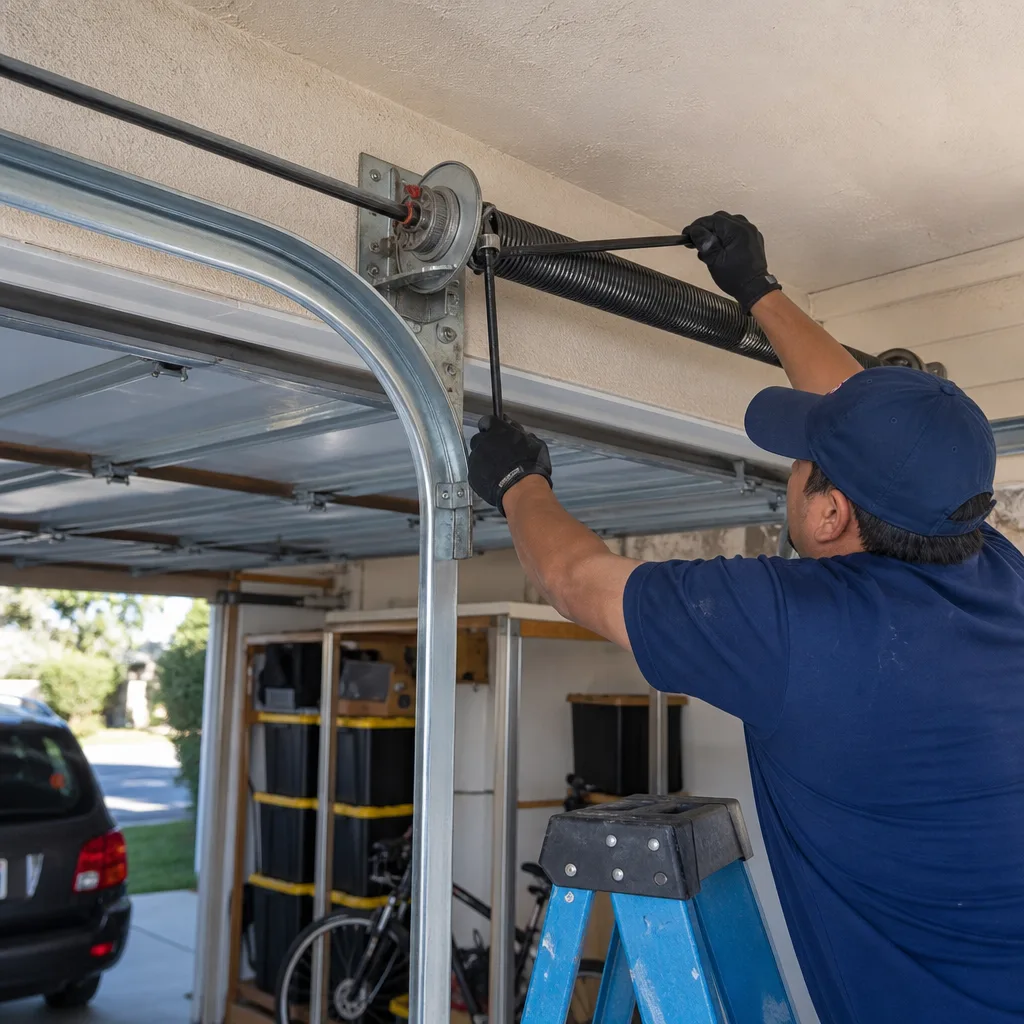
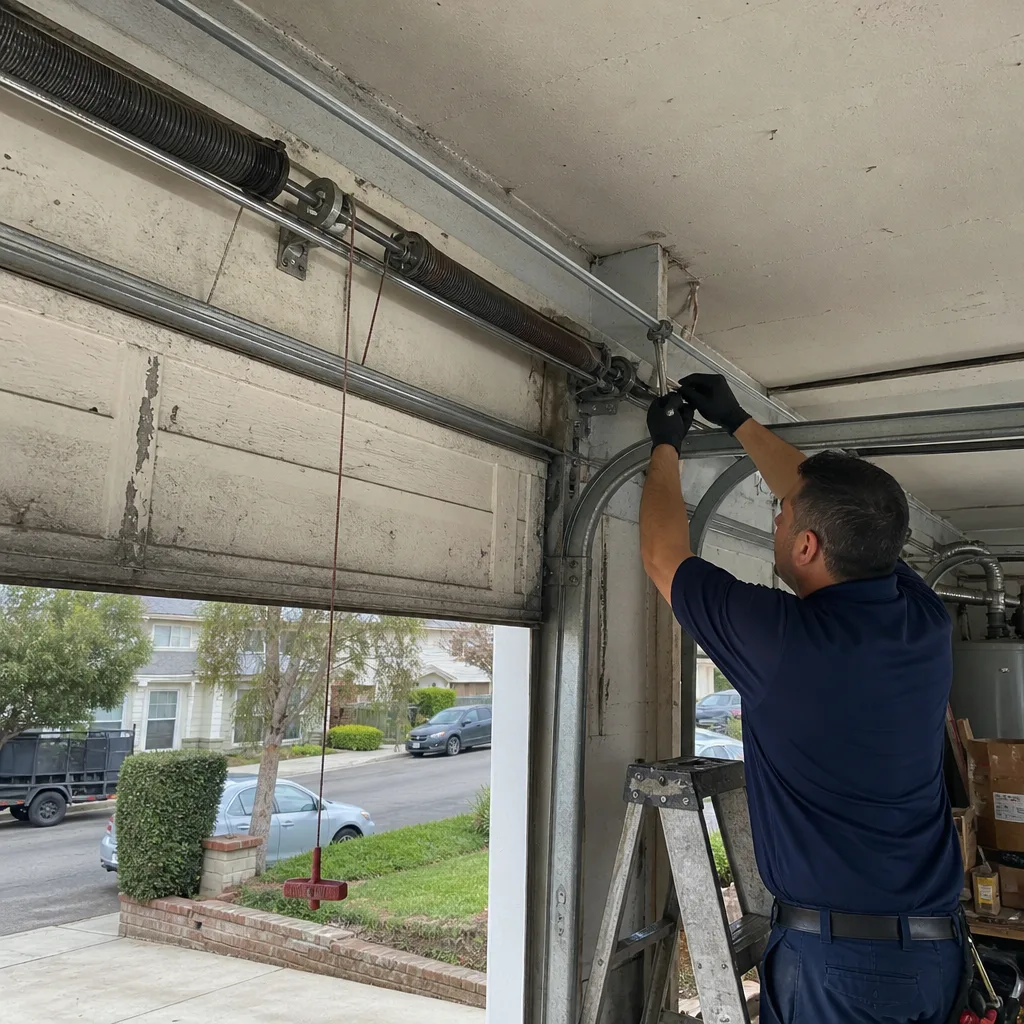
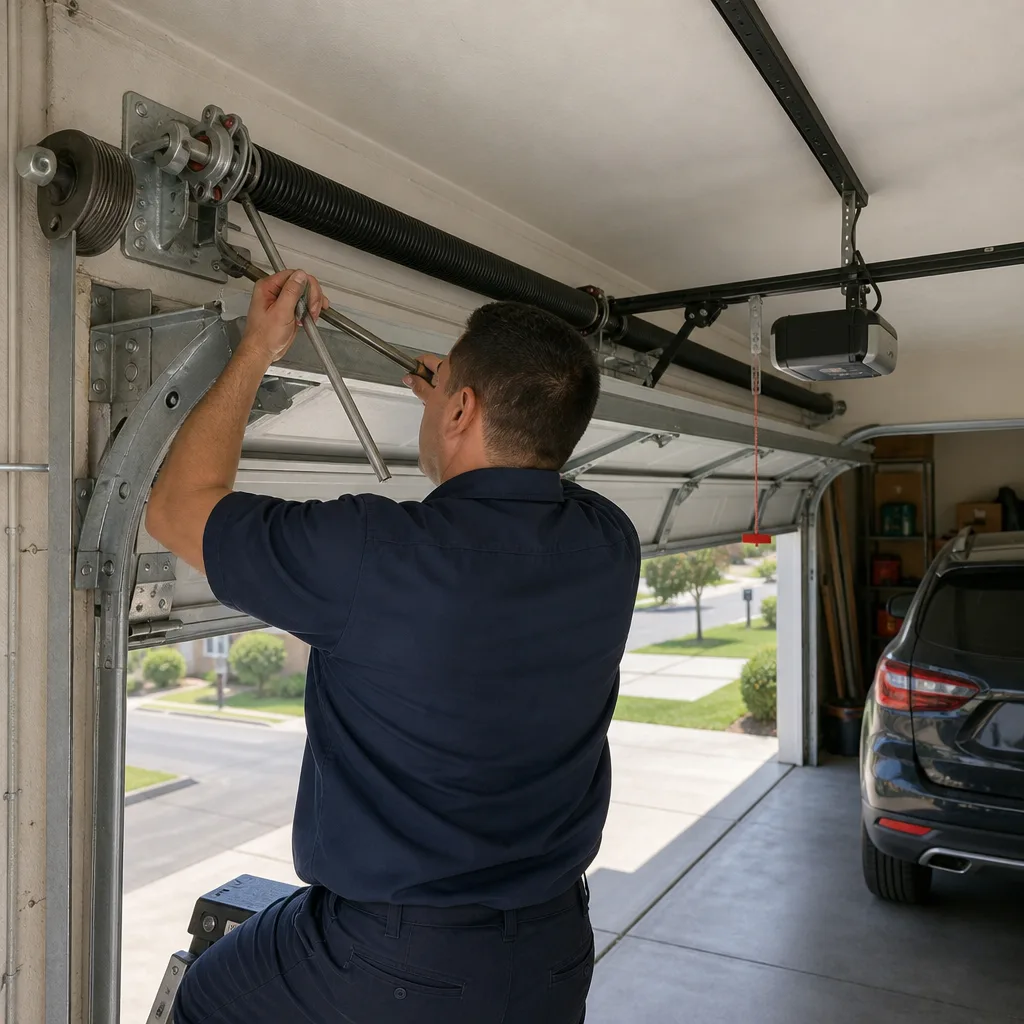
Here’s how to check it safely. Stand inside the garage with the door closed. Look up at the spring mounted above the center of the door opening. Do not touch it. Do not put a ladder under it. Just look. Compare the coil spacing from end to end. A spring that looks even is fine. A spring with a gap in one area needs professional attention. If you see a gap larger than about 3/16 of an inch, call a technician. A spring that lets go while under tension is dangerous, and we cannot overstate this. It holds enough stored energy to cause serious injury. This is the one maintenance item where we never suggest a DIY approach. When we replace springs on Glendora garage door repairs, we always replace both springs on a two-spring system, because when one fails, the other is close behind.
Lubrication Schedule for Glendora’s Temperature Range
Garage door lubrication is the one maintenance task that makes an immediate, noticeable difference. A properly lubricated door runs quieter, strains the opener less, and extends the life of the rollers and hinges. But the product you use matters a lot in Glendora’s climate. Most national checklists say to use white lithium grease or any household lubricant, and that advice fails here. White lithium grease gets thick and tacky above 95°F, and a local garage can hit 110°F inside during a summer heat wave. When the grease goes tacky, it grabs dirt and grit, and then it works against you, gumming up the rollers and making the door run rough.
What works in Glendora is a silicone-based or Teflon-based spray lubricant rated for high temperatures. These products stay slick in heat and don’t collect grit the way grease does. Look for a product that explicitly says high-temperature or heavy-duty on the label. Avoid anything that says grease. The distinction matters, and it’s one of the most common mistakes we correct on service calls for opener repair and door maintenance.
The lubrication points, in order: the metal rollers (not the nylon wheels, the metal bearings), the hinges at each panel joint, the torsion spring itself, and the opener rail if you have a chain-drive or screw-drive unit. A light coat, not a soaking. Wipe off the excess with a rag. When you do this twice a year with the right product, you’ll hear the difference immediately. If you’re not sure what to use on a LiftMaster or Chamberlain opener, check the manual, or ask us during a garage door opener repair visit. The wrong lubricant on the rail is worse than no lubricant at all.
Roller Wear Patterns and When Nylon Beats Steel
Garage door rollers are the component homeowners think about least, but they absorb constant friction and show specific wear patterns that tell you a lot about the health of the whole system. Rollers wear in two ways: the wheel itself develops flat spots or chips, and the stem that connects the wheel to the hinge wears thin. A roller with a flat spot makes the door thump rhythmically. A worn stem lets the wheel lean, which then cuts a groove into the track and accelerates track wear. Both patterns are easy to spot during the walk-around.
In Glendora, the wear math works like this. A household where two cars come and go on a daily cycle opens the door four to six times a day. That’s roughly 1,500 to 2,000 cycles a year. The steel rollers that come standard on many doors from Wayne Dalton and Clopay installations are rated for a finite number of cycles, and at heavy use they start degrading visibly around year three or four. Nylon rollers with sealed bearings run quieter, last longer, and are gentler on the track. The trade-off is cost. Nylon rollers typically run two to three times the price of steel, but for a door that cycles heavily, they usually pay for themselves in reduced track wear and less opener strain.
When you inspect the rollers, look for flat spots on the wheel, cracks in the nylon, and wobble when you wiggle the stem. If a roller is visibly leaning or the wheel doesn’t spin freely, it’s time to replace it. Roller replacement is a job we commonly handle as part of broader garage door service, and it’s one area where switching to nylon on a high-use door is a genuinely smart upgrade rather than an upsell. For a Craftsman or Amarr door that’s seen five years of daily cycling, fresh rollers often make the door feel new again.
Bottom Seal and Weatherstrip Degradation in Glendora UV
The rubber bottom seal on a garage door does three jobs: it keeps water out during winter rains, it blocks dust and debris from blowing in, and it helps regulate the temperature inside the garage. In Glendora, that rubber has a rough life. The UV exposure here is intense, especially on south and west-facing garage doors, and the heat cycle of a summer day hardens rubber fast. Manufacturer specs often say a bottom seal lasts five years. In our experience, most seals on Glendora doors are done by year three. By year four, they’re cracked, stiff, and no longer sealing against the floor.
You’ll know the seal is failing when you see daylight under the closed door in one spot, or when you feel a draft along the bottom, or when leaves and dust collect inside the garage after a wind event. The seal should be soft enough to compress when you press it with a thumb. If it feels hard or cracks when you bend it, replace it. Replacement is straightforward for most doors, and the seal itself is inexpensive. The labor is simple enough for a lot of homeowners to handle, but if the door also needs track adjustment or the retainer channel is bent, we handle seal replacement as part of Glendora garage door repair calls regularly.
On the door’s side weatherstrips, the picture is similar. The vinyl strips along the sides of the jamb crack and pull away in direct sun, and they’re often the entry point for dust during Santa Ana winds. Check them twice a year, and replace them when they lose pliability. Keeping the seal tight pays off in lower energy costs and a cleaner garage, and it’s one of the more widely missed items on maintenance checklists.
Opener Force Setting Test: The Accurate Method
The opener’s force setting controls how much resistance the motor overcomes before it stops or reverses. Set too high, and the opener will keep pushing against an obstruction or a binding door, which damages components and creates a safety risk. Set too low, and the door won’t close reliably. Most homeowners never touch this setting, and most national checklists skip the test entirely or suggest the paper-roll trick: place a roll of paper towels under the closing door and see if it reverses. That method gives inaccurate readings on older LiftMaster and Chamberlain units, because the force needed to crush a soft paper roll is different from the resistance of a real obstruction.
The accurate test uses real resistance. Close the door on a solid object that can compress slightly and then stop, like a 2×4 laid flat on its side. The door should contact the board, detect the resistance, and reverse within one to two seconds. If it keeps pushing, stalls, or reverses only after visibly straining, the force setting is too high. On modern openers with adjustable dials or digital settings, turn the down-force setting down slightly and repeat the test until the door reverses promptly. If you have to turn it up significantly to get the door to close at all, the force setting isn’t the problem; the door is binding, the springs are tired, or the rollers are worn, and you should address that first.
This test matters for safety, and it’s particularly relevant for homes with young children or pets. It’s also one of the things we check on every opener repair call in Glendora, and a force setting that’s drifted high is the most common finding on openers that are ten years old or older. Whatever opener you have, we know it: LiftMaster, Chamberlain, Genie, and Craftsman units all respond to the same basic test, though the adjustment method varies by model.
Common Mistakes to Avoid
- Using white lithium grease in summer heat. It thickens and collects grit above 95°F, which is most of the summer in Glendora. Use a high-temperature silicone or Teflon spray instead.
- Skipping the track alignment check because the door “still works.” A door that runs rough is already damaging its rollers and track. Small alignment issues turn into bent tracks if ignored.
- Lubricating the wrong parts. Grease on the plastic gears of an opener, or on the rubber belt, accelerates failure. Lubricate hinges, metal roller bearings, and the spring, not the belt or the gear.
- Replacing one torsion spring instead of both. When one spring on a two-spring system fails, the other is at the same point in its life. You’ll be back in six months for the second one, and you’ll pay labor twice.
- Ignoring a bottom seal that’s “cracked but still attached.” A cracked seal isn’t sealing. Water, dust, and hot air get in, and the door keeps operating like nothing’s wrong until a winter storm makes the problem obvious.
- Adjusting the opener force to compensate for a binding door. Cranking up the force setting to overcome a stuck door doesn’t fix the underlying issue. It masks it while stressing the opener motor and the door hardware.
- Doing the checklist once a year instead of twice. The spring-to-fall cycle in Glendora puts different stress on the door at different times of year. Two checks a year catches issues that one check misses.
When to Call a Professional
Some maintenance tasks are safely DIY: lubrication, seal replacement, visual inspections. But any work involving the torsion spring, the track bolts under tension, or the opener’s electrical components should go to a trained technician. A torsion spring replacement is dangerous because the spring holds a massive amount of stored energy. A track bolt that’s under tension can snap and cause injury if loosened incorrectly. And opener wiring issues are electrical work. If the door is off-balance, the spring shows a coil gap, the track has shifted, or the opener is behaving erratically, call a professional. Garage Door Service Glendora offers free estimates in Glendora, and we cover the full scope: door repair, opener repair, and complete installation. Call (855) 382-3042 and we’ll come out, diagnose the problem, and give you a clear price before any work starts.
Frequently Asked Questions
Lubricate your garage door every six months, ideally in March and October, using a high-temperature silicone or Teflon spray. Glendora’s summer heat makes white lithium grease tacky and counterproductive, so stick with products rated for high heat. Call (855) 382-3042 if you’re not sure which lubricant to use on your specific door.
A failing torsion spring shows a visible gap between coils in one section of the spring, usually 1/8 inch or wider, while the rest of the coils stay tight. If you see this gap, do not touch the spring. Call a professional, because the spring is under dangerous tension and could snap. Estimates are free at (855) 382-3042.
Grinding after summer usually means the track has shifted due to soil settlement under the garage slab. Glendora’s red clay soil contracts during dry months, moving the floor slightly and twisting the track. The fix is track realignment, which is a common repair we handle quickly. Call (855) 382-3042 for a free estimate.
Bottom seals on Glendora garage doors typically last about three years, not the five years many manufacturers claim. Intense UV exposure and summer heat harden the rubber faster here. If your seal is cracked, stiff, or letting in daylight, it’s time to replace it.
Roller replacement on the bottom brackets involves the tension cable, which is under load and can cause injury if handled incorrectly. Upper rollers are manageable for a careful DIYer, but bottom rollers should go to a professional. We replace rollers regularly as part of garage door repair calls in Glendora, and the job is usually quick. Call (855) 382-3042 for pricing.
Most Glendora garage doors are repairable, and our approach is repair first. We replace components like springs, rollers, tracks, and seals when they fail, and we only recommend a full replacement when the door itself is structurally compromised or the homeowner wants an upgrade. We work across major brands including Clopay, Amarr, Wayne Dalton, and Craftsman, so we can source the right parts for whatever you own. If you’re planning a new door instead, see our Garage Door Installation in Glendora page for options.
The Bottom Line
A garage door that’s maintained on a Glendora-specific schedule lasts longer, runs quieter, and costs less to own. The checks that matter here are the ones that account for our heat, our UV, and our soil: track alignment, spring coil gap, high-temperature lubrication, roller wear, bottom seal condition, and opener force setting. Run the full checklist twice a year in March and October, and you’ll catch the problems that otherwise become emergency calls in the heat of August or the first rain of November. When you find something that needs professional attention, we handle it across all three service areas: garage door repair, opener repair, and full installation. Garage Door Service Glendora works on whatever brand you own, from Clopay and Amarr doors to LiftMaster and Genie openers. Call (855) 382-3042 for a free estimate, and we’ll take it from there.
Written by the team at Garage Door Service Glendora, serving Glendora since 2014.
See the difference
 Before
 After
 Before
 After
 Before
 After