
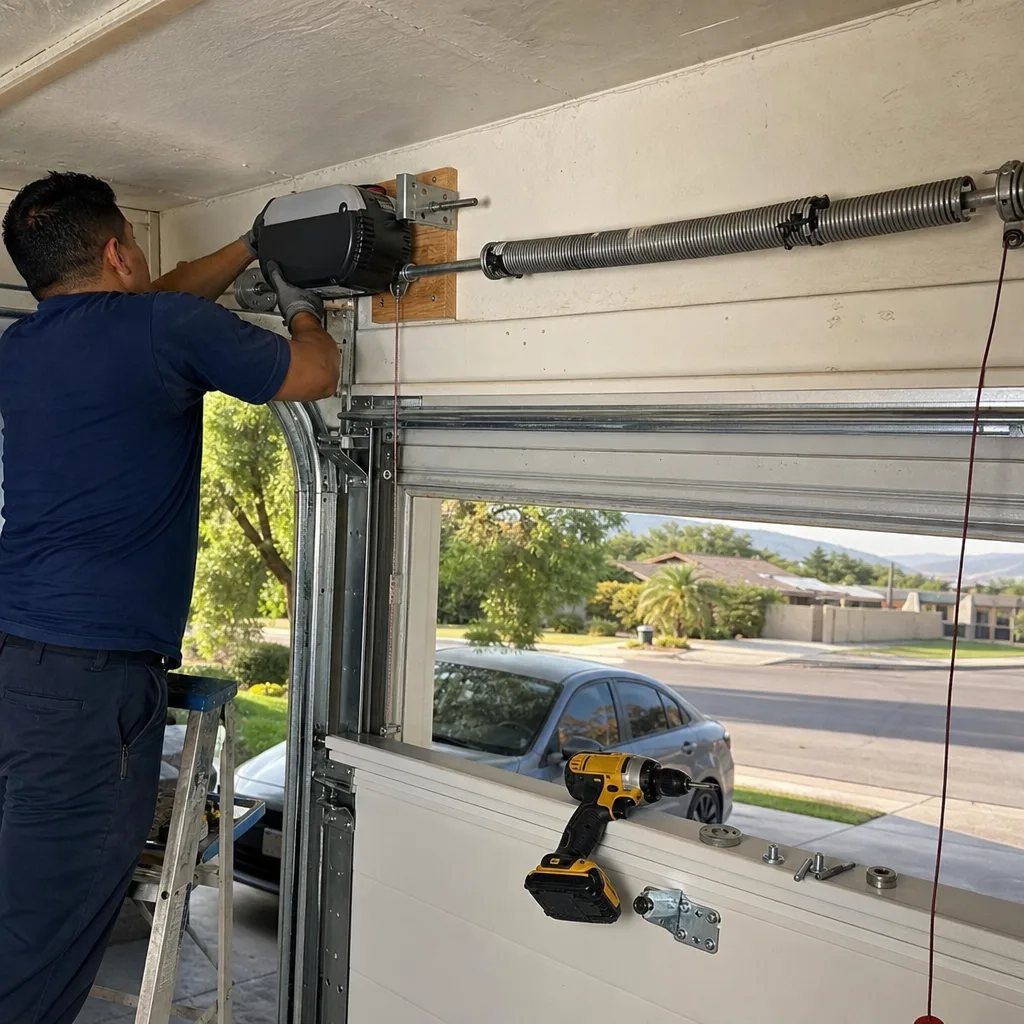
Last updated November 3, 2026
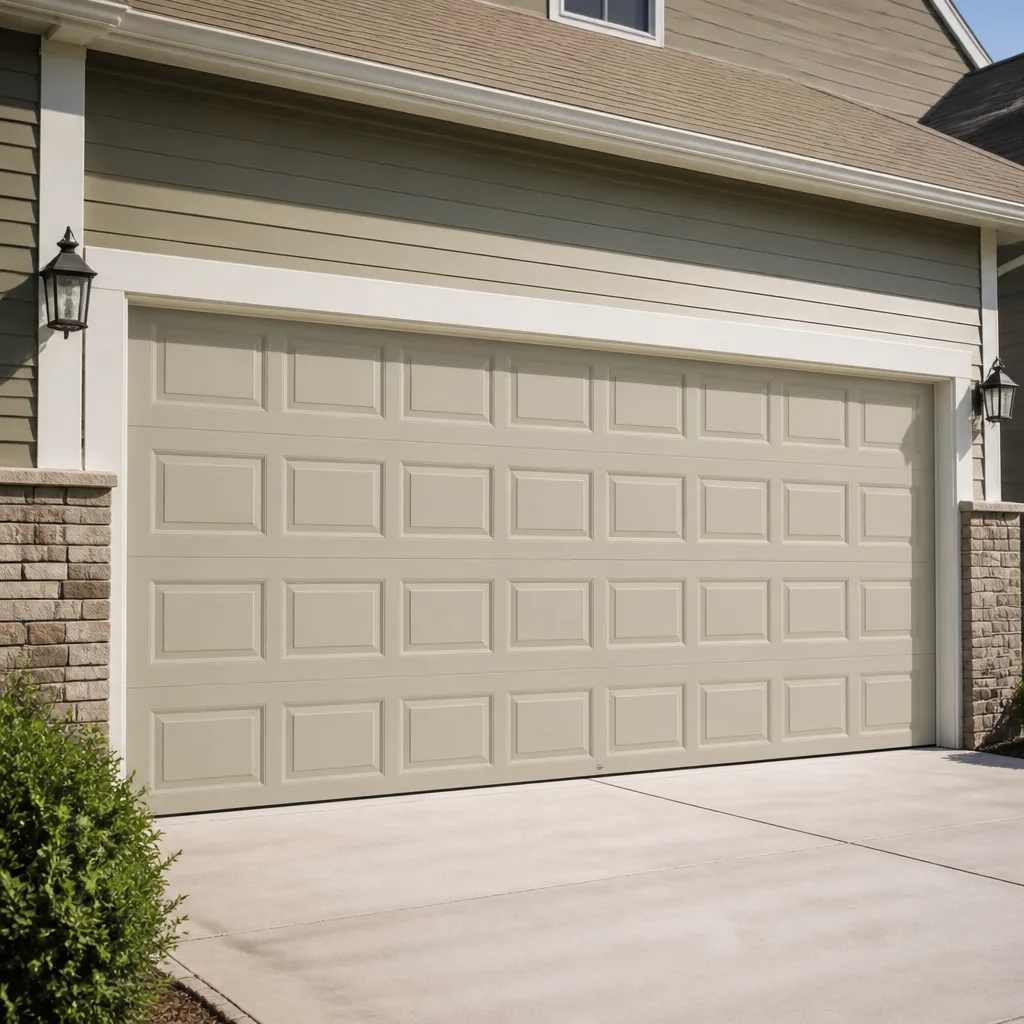 Raised-panel steel
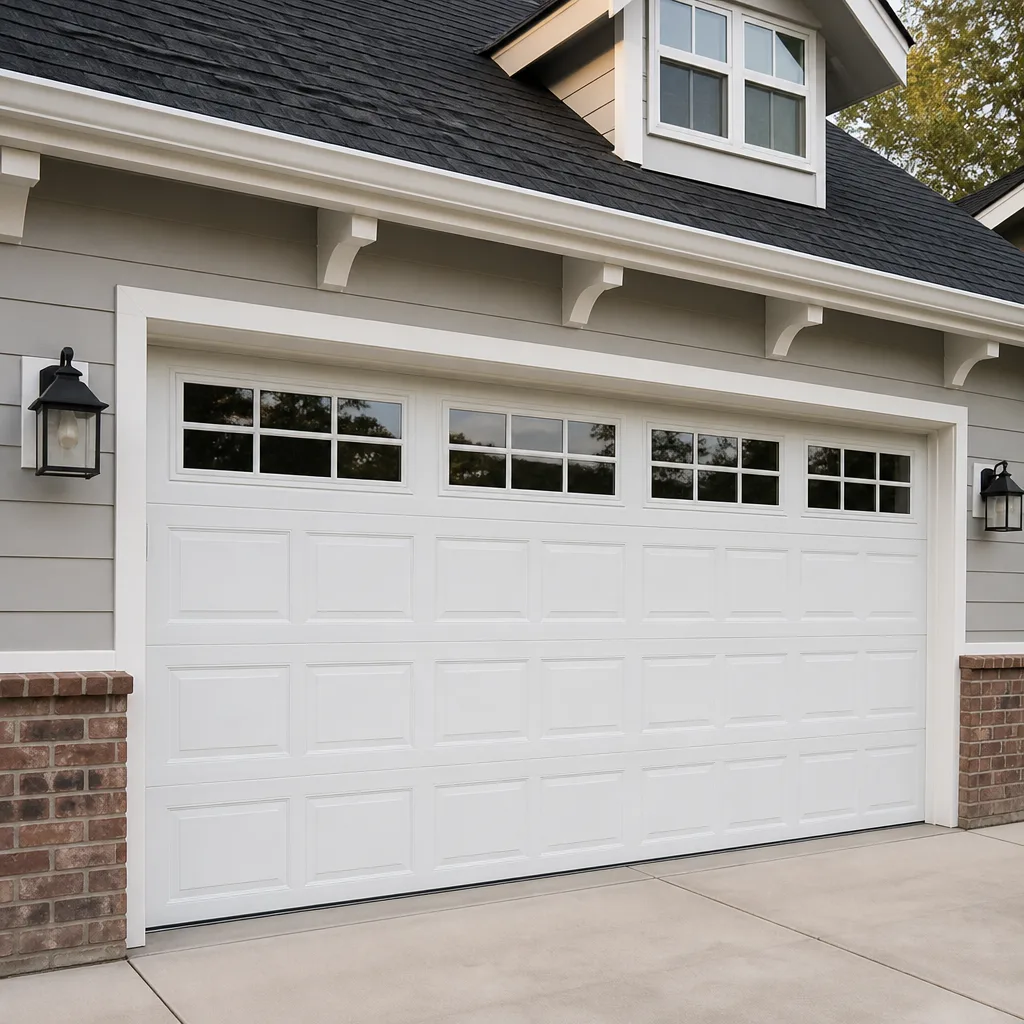
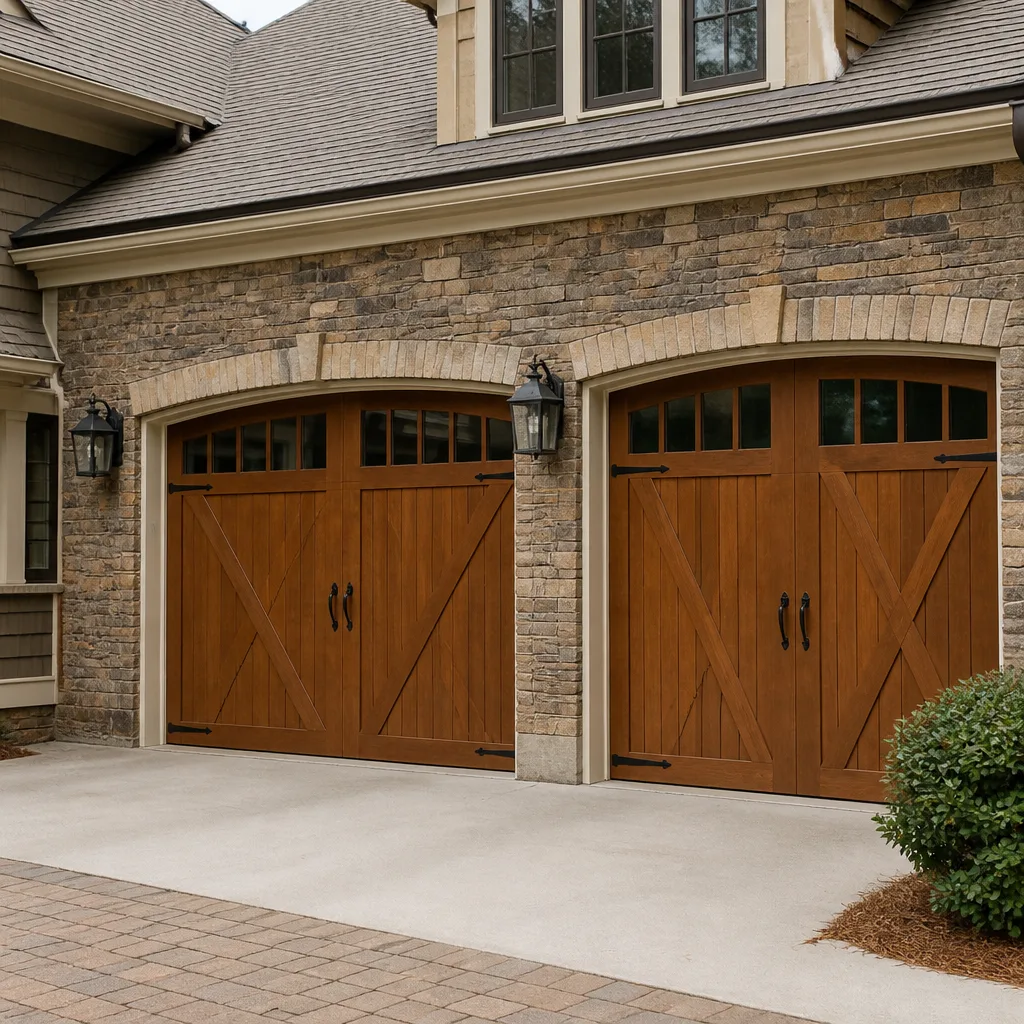 Carriage house
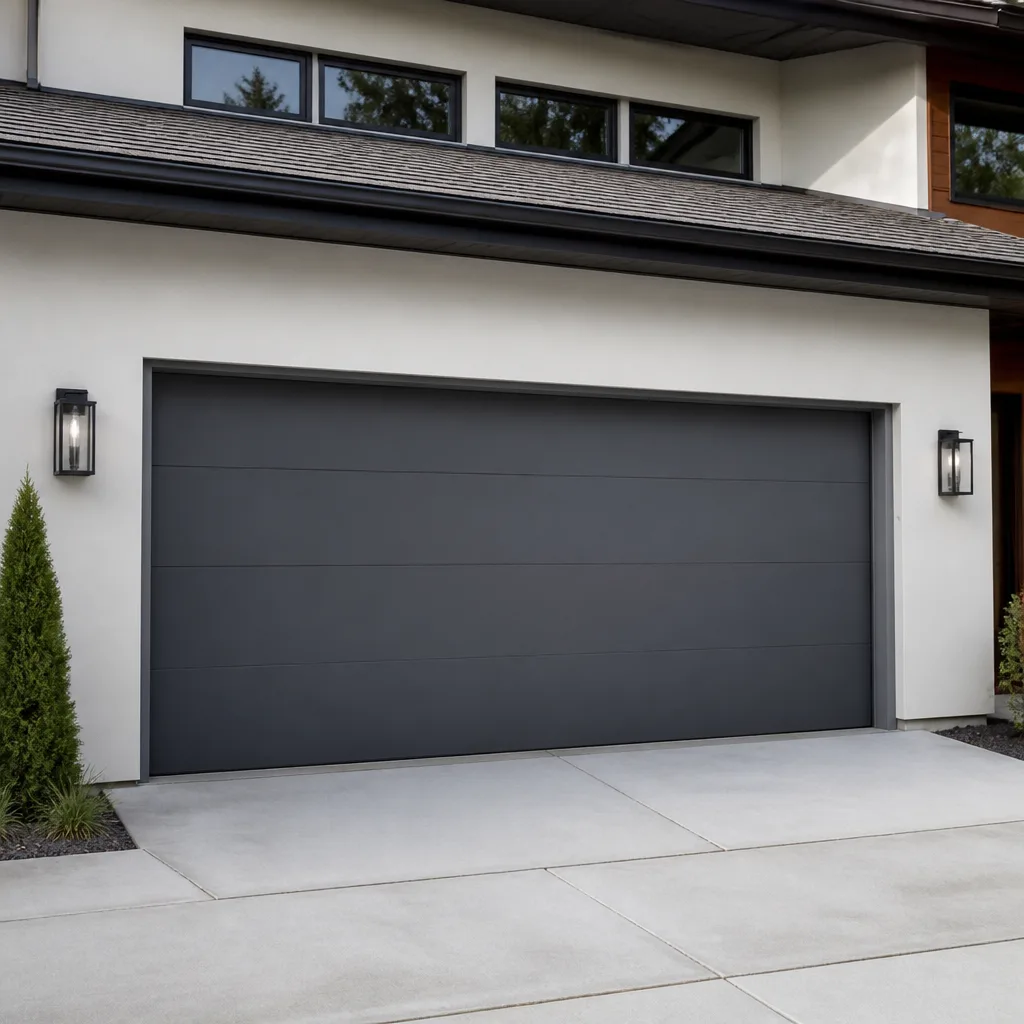 Modern flush
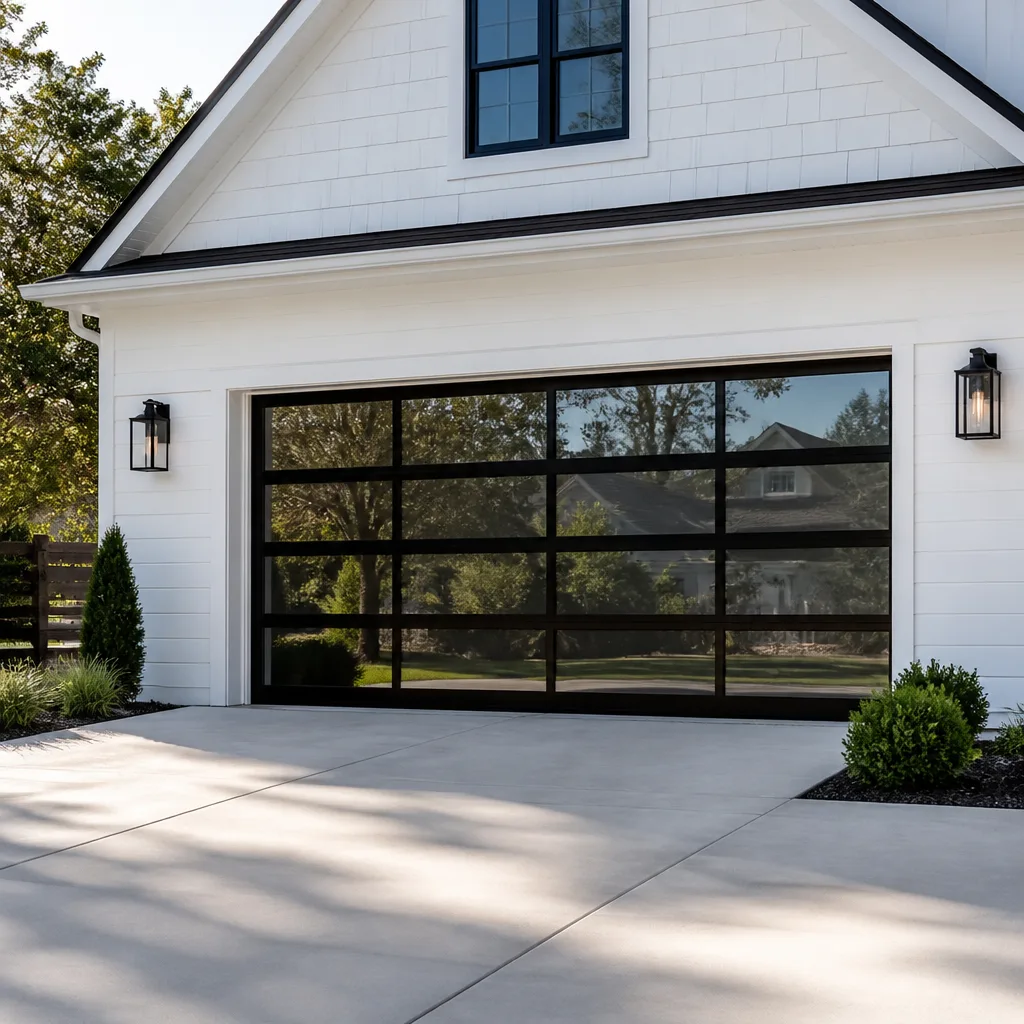 Full-view glass
 LiftMaster openers
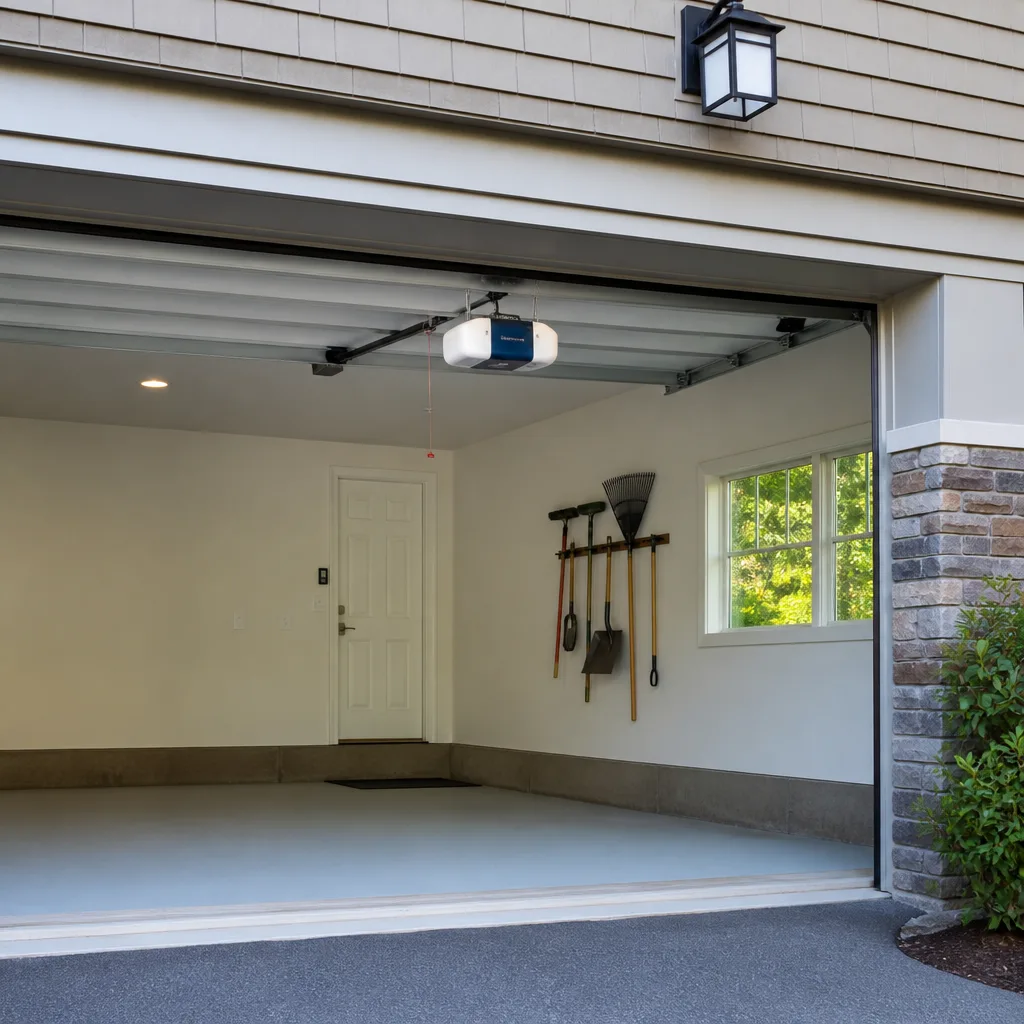 Chamberlain openers
Full 25-point door and opener safety check with every visit - springs, cables, rollers, tracks, and your LiftMaster or Chamberlain opener included
You get a price before we start. It does not change when the truck arrives.
Get your free estimateSeasonal Garage Door Care for Glendora: Year-Round Homeowner’s Guide
Most seasonal garage door guides tell you to lubricate in fall before the cold hits. That advice makes sense in Minnesota. In Glendora it’s about six weeks late. By the time September ends, your door hardware has already taken a beating from three months of 95-degree heat and the first Santa Ana winds are two weeks out. This guide is built around Glendora’s actual climate calendar, not a generic four-season template, and complements our The Complete Garage Door Repair Guide for Glendora Homeowners. You’ll learn what each stretch of the year does to your door, what to check, what to fix now, and what can wait.
Quick Answer
Garage door care in Glendora follows four real seasons: Santa Ana wind season (September through November), the short winter-wet window (January through March), spring temperature cycling (March through May), and the long dry heat stretch (June through October). The most important checks are wind-event door balance, heat-expanded track alignment, ember-seal gaps during fire season, and seal replacement in the wet window. Most of this takes under an hour per season and costs little to nothing unless a part has already failed; see The Complete Garage Door Repair Guide for Glendora Homeowners for deeper troubleshooting.
Styles & brands we work with
- Raised-panel steel
- Carriage house
- Modern flush
- Full-view glass
- LiftMaster openers
- Chamberlain openers
Table of Contents
- Santa Ana Season Prep: September Through November
- Summer Heat Protocol: Surviving the 95-105 Degree Stretches
- Fire Season Considerations: Embers, Seals, and Clearance
- The Winter-Wet Window: January Through March
- The March Spring Inspection: Before the Heat Returns
- Lubrication the Glendora Way: What to Use Above 90 Degrees
- The 10-Minute Monthly Check Worth Doing
- Common Mistakes to Avoid
Santa Ana Season Prep: September Through November
Santa Ana winds do something specific to garage doors that most homeowners never connect to the weather: they change how the door feels when you lift it manually. After a wind event, a door that was balanced in August can suddenly feel heavy or drop on its own when held halfway. That’s not your imagination. Sustained wind gusts press against the door face and transfer lateral force through the panels into the hinges, rollers, and spring assembly. Over repeated events, hardware loosens and the torsion spring loses a fraction of its calibrated tension. A door that drops when released half-open is a spring that’s no longer matching the door weight. In Glendora, we see this pattern every October.
Here’s what to check after the first significant wind event of the season, and again in November:
- Run the manual balance test. Pull the release handle and lift the door to waist height. It should stay put. If it drops more than six inches, the spring tension is off. Don’t adjust torsion springs yourself. This one is worth a call to a technician who works on your specific brand of door, whether that’s Clopay, Amarr, or Wayne Dalton. The spring type and winding differ by manufacturer and door weight.
- Tighten hinge and track bolts. Wind vibration loosens the bolts that hold hinges to panels and track brackets to the wall. A 7/16-inch socket and ten minutes covers most doors. If a hinge is loose, tightening it now prevents the panel from cracking later.
- Inspect roller stems. Wind stress bends roller stems on single-car doors more than any other weather factor. A bent stem makes the roller ride at an angle, which wears the track and causes that rattling sound during operation. Bent roller stems need replacement, not straightening.
- Look for wind-driven debris in the track. Santa Ana winds carry leaves, twigs, and sometimes roof gravel into garage door tracks. Debris in the vertical track causes the door to bind mid-travel and can gouge the roller. Clear it by hand and vacuum the track base.
One more thing about wind season: doors with windows are more vulnerable than solid-panel doors. Wind-driven debris cracks or chips window inserts. If you have a door with glass panels, inspect them after every major wind event. A cracked insert on a Clopay or Amarr door is easier and cheaper to replace before moisture gets into the panel core. If you need a hand with wind-damaged hardware, our Garage Door Repair in Glendora service covers exactly this kind of seasonal damage.
Summer Heat Protocol: Surviving the 95-105 Degree Stretches
Steel expands when it heats up. That’s not news. What surprises Glendora homeowners is how much expansion matters to a garage door. A standard 16-foot steel track grows by roughly 1/8 to 1/4 inch from morning to mid-afternoon on a 100-degree day. That’s enough to shift a track that was installed tight to the wall out of parallel alignment. When tracks aren’t parallel, the rollers bind, the door runs rough, and the opener motor strains harder than it should. A strained opener is a shortened opener lifespan.
Here’s the summer protocol we recommend for Glendora garages:
- Feel the door in the late afternoon. Run the door open and closed at 3 or 4 p.m. on a hot day. Listen for scraping. Watch the rollers. If the door shudders mid-travel only when hot, you’re dealing with thermal expansion in the track or panel, not a failing part. Track brackets typically need minor adjustment to restore parallel alignment.
- Use the right lubricant. Standard white lithium grease dries into a stiff film above 90 degrees. It also collects dust, which becomes a grinding paste in Glendora’s dry air. Use a silicone-based lubricant designed for garage door hardware. It stays viscous in heat and doesn’t attract grit.
- What to lubricate: roller bearings (metal rollers only, not nylon-capped), hinge pivot points, the torsion spring coils, and the opener rail if you have a screw-drive unit. Skip the track itself. Lubricated tracks cause roller slip and are a common DIY mistake.
- What to avoid in heat: WD-40 on any part of the door mechanism. It’s a solvent, not a lubricant, and it strips whatever protective film is already on the metal. Also avoid heavy axle grease. It thickens in heat and makes rollers sluggish.
- Check the opener’s thermal behavior. Older openers (especially Craftsman and Genie units from the 1990s and early 2000s) have thermal overload protection that trips in hot attics and uninsulated garages. If your opener stops working only on hot afternoons and works fine after dark, the motor is overheating. This is more common in attached garages that face west in Glendora, where afternoon sun heats the garage interior past 110 degrees. An overheating motor needs ventilation or replacement, not a new remote battery.
If your opener gives up mid-summer, our Garage Door Opener Repair in Glendora service handles thermal overload issues, circuit board failures, and gear replacements on LiftMaster, Chamberlain, Genie, and Craftsman units. Whatever opener you have, we know it.
Fire Season Considerations: Embers, Seals, and Clearance
Glendora sits in a designated Very High Fire Hazard Severity Zone. If you live north of Foothill Boulevard or anywhere in the foothill neighborhoods near the San Gabriel Mountains, fire season isn’t an abstract threat. It’s a yearly reality. Your garage door plays a role in home hardening that most people overlook. The bottom seal gap on a typical garage door ranges from 1/4 inch to 1 inch depending on floor settling and seal wear. During an ember event, wind-driven embers follow that gap. Once inside the garage, embers find stored cardboard, paint, and fuel containers. This is how garages become ignition points before the main fire front even arrives.
Current CalFire guidance for wildfire zones includes these garage-specific steps:
- Replace any bottom seal with visible gaps or cracking. A compression-style rubber or vinyl seal that contacts the floor along its full width is the baseline. If you can see daylight under the seal from inside the garage with the door closed, it’s too big a gap. Seal replacement is a low-cost fix that closes the primary ember entry point.
- Check the perimeter weatherstrip on the sides and top. The vinyl trim strips that run along the exterior frame of the door opening crack and curl after years of direct sun. Embers don’t need a big opening. A half-inch gap at the top corner of the door is an entry route.
- Maintain brush clearance around the door exterior. CalFire recommends a 5-foot noncombustible zone immediately surrounding the structure. That includes the area directly in front of and beside the garage door. Remove dead leaves, stacked lumber, and stored cardboard from the door perimeter. Low-growing, well-watered plants are acceptable outside the immediate 5-foot ring.
- Know your door panel material. Wood sectional doors offer the least ember resistance. Steel doors with a wood-composite or insulated core perform better. If you’re replacing a door in a foothill neighborhood, steel construction with a fire-rated bottom seal is the current best practice. Amarr and Clopay both make insulated steel doors that outperform wood in ember conditions. Our Garage Door Installation in Glendora service can walk you through what fits your opening and your fire-safety priorities.
One nuance worth knowing: a door that’s balanced correctly closes flush against the floor. A door that’s slightly out of balance can leave a larger gap on one side, even with a new seal. If you replace a bottom seal in fire season, have the door balance checked at the same time. The two work together.
The Winter-Wet Window: January Through March
Glendora’s wet season is short. Most years it’s ten to sixteen rain days spread between January and early March. But the cold snaps that accompany those rain days, especially overnight temperatures dipping into the 30s in the foothills, do something specific to rubber and vinyl seals: they make them contract and stiffen. A seal that was flexible in October becomes brittle at 38 degrees. When the door opens on a cold morning, a stiff seal can tear at the corners or crack along its length.
This is the right time of year for full weatherstrip replacement, and here’s why: you want new seals installed before the heat returns, because installing them in summer means the material is soft and pliable and easier to stretch too far. A seal installed properly in cool, damp weather sets into the right position and stays there through summer. Installing in 100-degree heat often results in a seal that sags or pulls away at the corners within weeks.
What to check in the wet window:
- Bottom seal condition. Look at it from both inside and outside the closed door. Water staining on the garage floor near the door means the seal isn’t making full contact. That’s how Glendora garages get standing water during the big storms.
- Side and top weatherstrip. These dry out continuously in the sun, but cold weather is when the cracking becomes visible. If the vinyl is cracked, curling, or missing chunks, replace it. Don’t patch it. The patch always fails.
- Track rust. Rain plus coastal moisture carried inland means track surface rust, especially in uninsulated garages. Light surface rust is cosmetic. Deep flaking rust that’s warping the track profile needs replacement. Wire-brushing followed by a rust-inhibiting primer works for light to moderate rust.
- Opener safety sensors. Cold, damp mornings fog the sensor lenses. If your door reverses or refuses to close on rainy days, wipe the sensor lenses with a dry cloth before calling for repair. This fixes the problem about half the time.
The March Spring Inspection: Before the Heat Returns
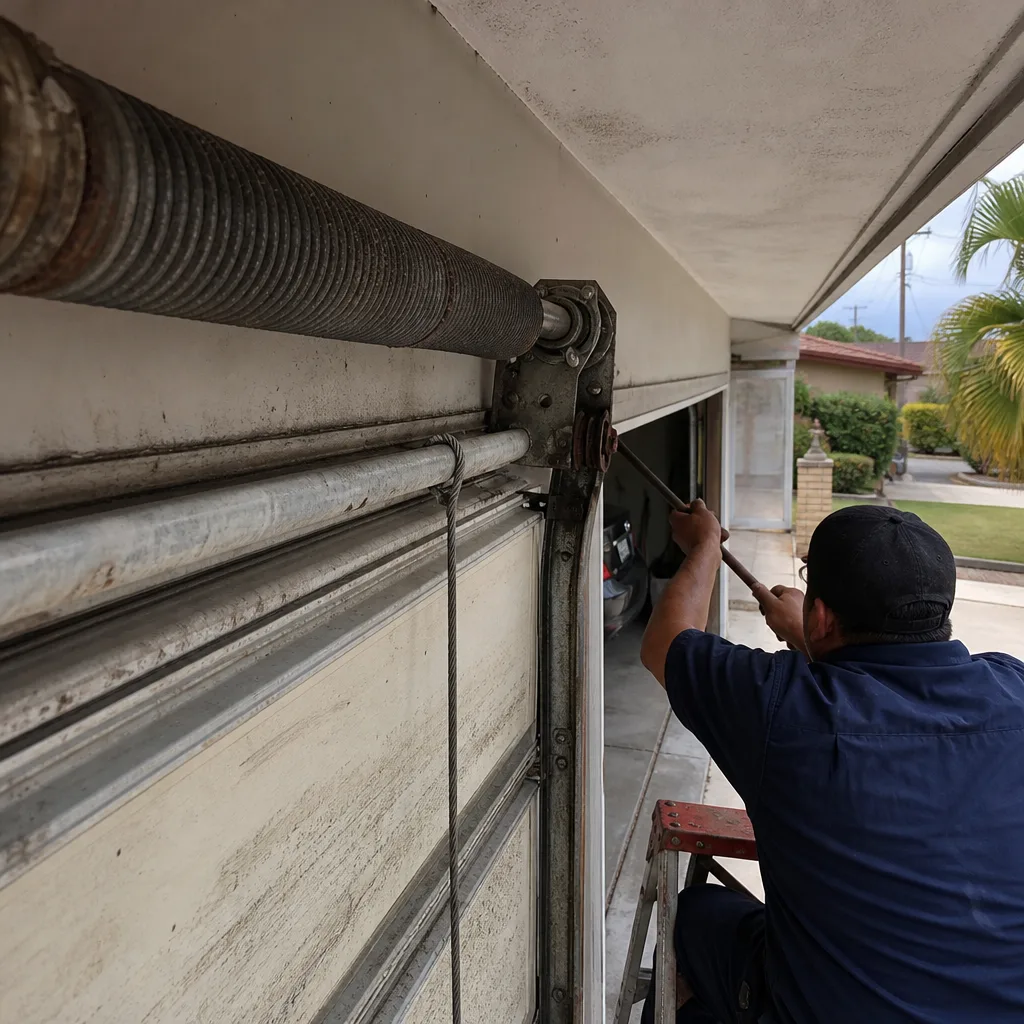
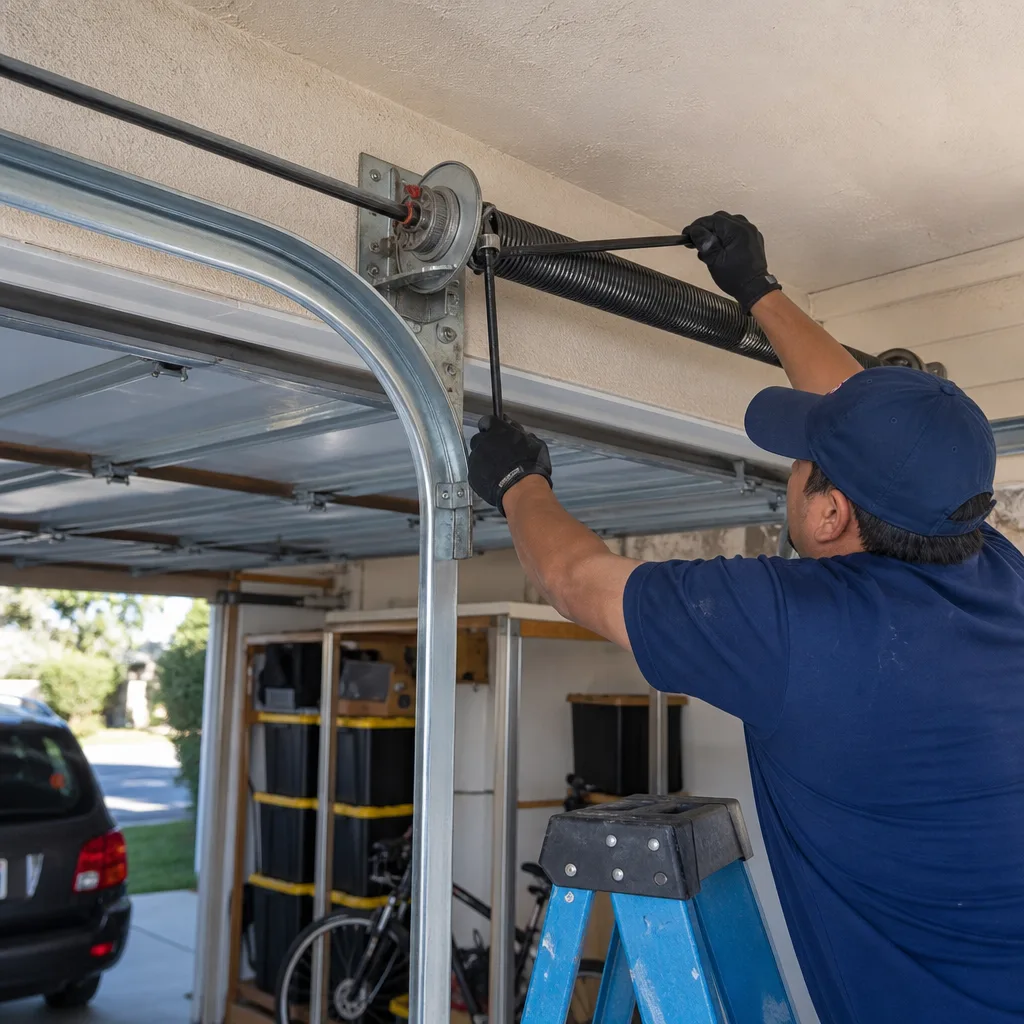
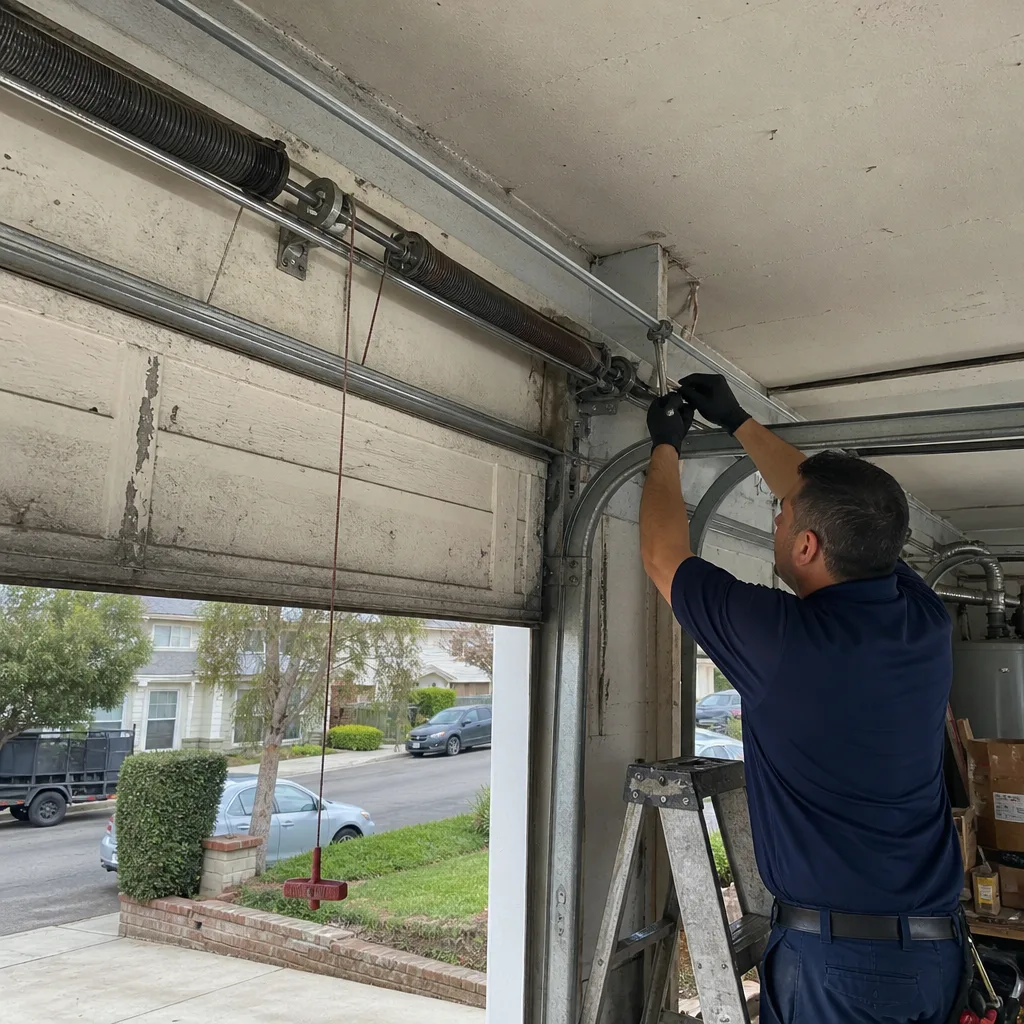
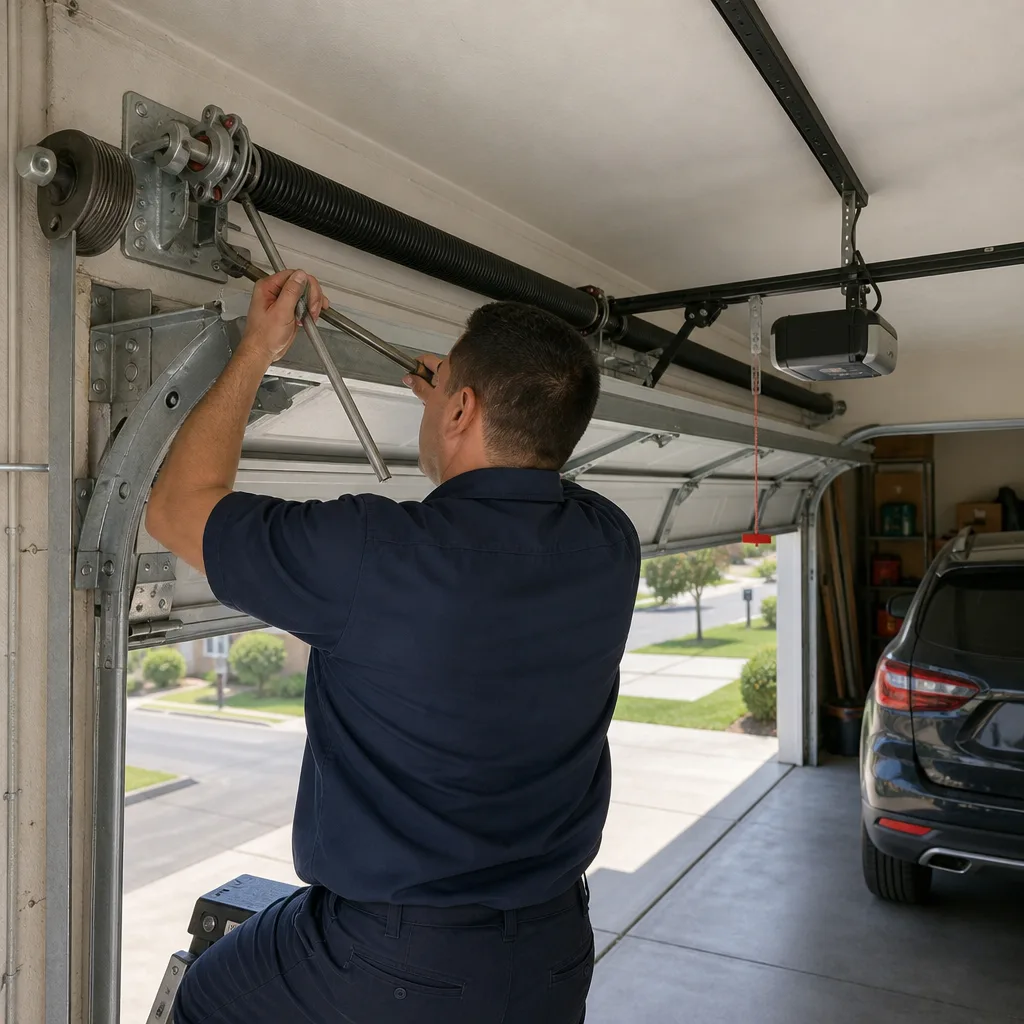
Every March, after the temperature cycling of winter, one inspection matters more than any other: the torsion spring. Here’s what happens. Steel springs expand and contract with temperature changes. After several months of cold nights and warm days, the metal develops micro-fatigue. It doesn’t snap the first time it flexes. It fatigues incrementally, coil by coil, until one morning the spring breaks when you’re leaving for work. In Glendora, spring failures cluster in March and April. The temperature cycling of the wet season is the cause.
Here’s how to spot a fatigued spring before it snaps:
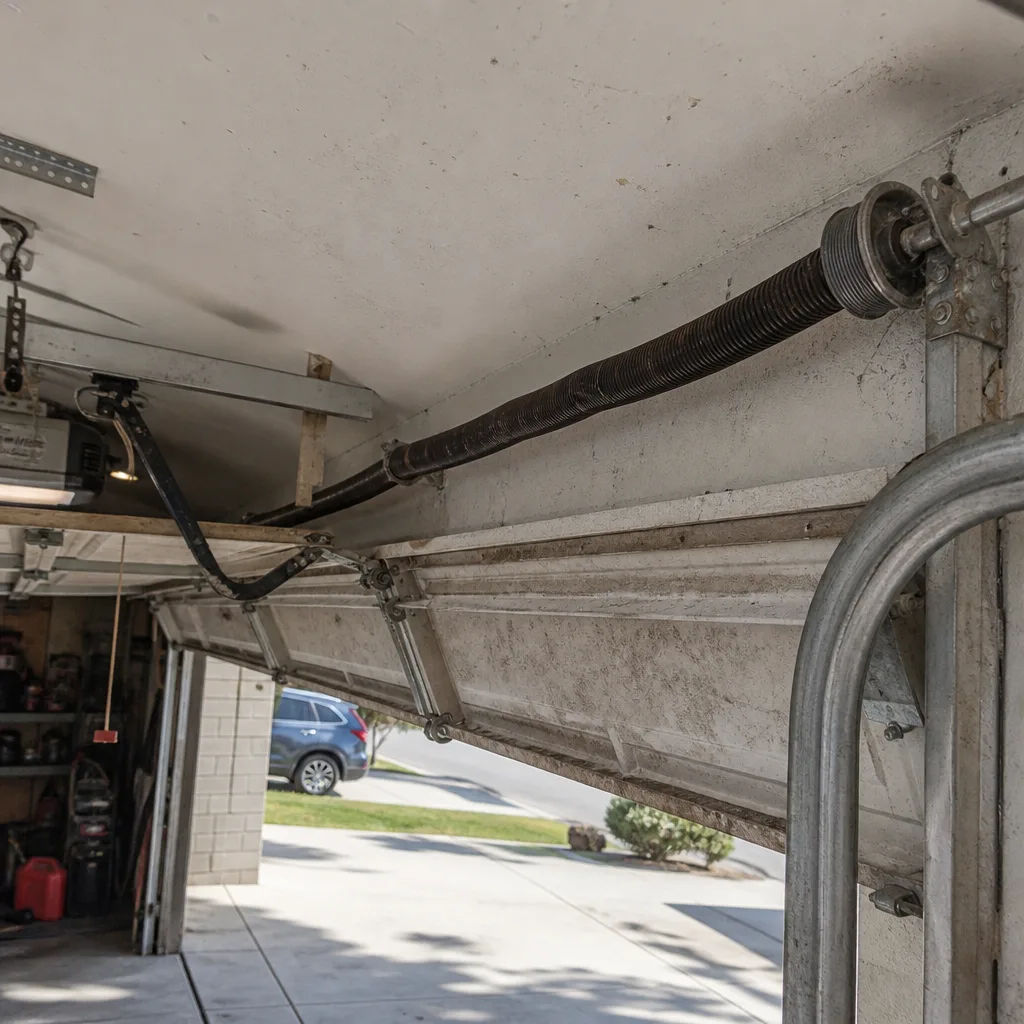
- Look for a visible gap between coils. A healthy torsion spring has tight, uniform coils. If you see a gap that’s opened up between two coils, the spring has already partially failed and the remaining coils are now carrying extra load. This is not a future problem. It’s a now problem.
- Listen for a loud bang you didn’t investigate. If you heard a loud bang from the garage in the last month and the door still works, check the spring. A spring that snaps one coil rather than failing entirely makes that noise and keeps working, but the remaining coils are overloaded and will fail soon.
- Check both springs on a two-spring door. Most double-wide doors run two springs. If one fails, the other carries the full door weight, which accelerates its failure. A one-spring door that’s out of balance uses more opener force and stresses the gear train. Both springs should be replaced together even if only one looks damaged. They’ve cycled the same number of times.
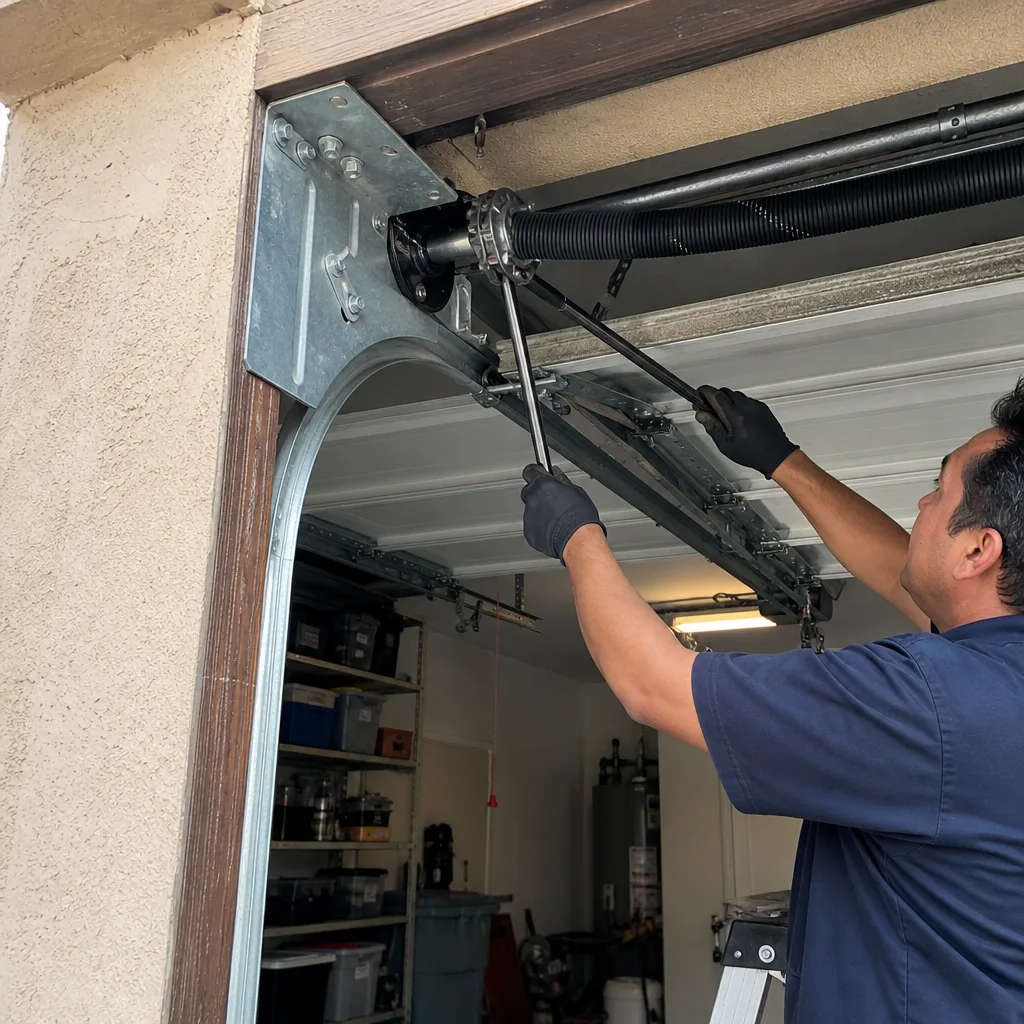
Don’t inspect a torsion spring by touching it. Look, don’t touch. The spring holds enough tension to cause serious injury if it releases unexpectedly. If you see a gap, a stretched coil, or rust that’s eaten more than surface deep into the coils, call a professional who carries springs for your door brand – our Choosing the Right Garage Door Brand: A Buyer’s Guide for Glendora explains why matching the brand matters. We service whatever door you own, including Clopay, Amarr, Wayne Dalton, and Craftsman spring types. Repair first, and we’ll tell you if the spring can be safely replaced or if the door needs rebalancing at the same time.
Lubrication the Glendora Way: What to Use Above 90 Degrees
Lubrication products fail in Glendora’s heat in predictable ways. Here’s the short version: use silicone or Teflon-based spray lubricant on moving parts. That’s the whole answer. Now for the reasoning, because the reasoning is what prevents the classic mistakes.
White lithium grease is the default recommendation in most garage door guides. It works in moderate climates. In Glendora’s dry heat, lithium grease oxidizes into a waxy film that stiffens roller bearings and makes the door run with more friction than it had before you lubricated it. The same applies to penetrating oils like WD-40, which are solvents that strip existing lubrication and leave bare metal.
Here’s the seasonal lubrication schedule that works for this climate:
- September (pre-wind season): Lubricate all hinge pivots, roller bearings, and the torsion spring. This coating protects the hardware through the dry, dusty wind months when airborne grit is at its worst.
- January (wet window): Re-lubricate roller bearings and hinges. Moisture degrades the September coat and cold makes the moving parts work harder.
- June (pre-heat): Light re-lubrication of the spring coils only. The door hardware carries less load in summer than in winter, but the spring flexes constantly in heat as tension shifts with panel expansion.
Use this much: two short sprays per pivot point, one pass along the spring. Too much lubricant is worse than too little because it captures dust and turns into abrasive slurry. A door that’s properly lubricated runs noticeably quieter. If you lubricate and the noise doesn’t change, the issue is mechanical wear, not dry hardware. That’s when a diagnosis matters more than another round of spray.
The 10-Minute Monthly Check Worth Doing
If you do nothing else from this guide, do this. Ten minutes, once a month, and it catches most failures before they strand you in the driveway. Set a phone reminder.
- Watch the door run while standing inside the garage. Open and close it fully once. Look at the rollers in the track. They should roll smoothly without sideways wobble. Listen for scraping, grinding, or slapping sounds.
- Run the balance test. Pull the release handle, lift the door to chest height, and let go. A balanced door stays. A door that drops or springs upward has a spring tension issue. This test takes 30 seconds and tells you more than any visual inspection.
- Check the safety reversal system. Close the door on a 2×4 laid flat under the door path. The door should reverse within two seconds of contact. This isn’t optional. Sensors and force settings drift over time, and a door that doesn’t reverse is a serious safety issue for kids and pets.
- Look at the bottom seal from outside. Look for gaps, cracks, or sections that have pulled free. Ten seconds.
- Scan the spring visually. Look for gaps between coils, rust, or anything that looks different from last month. Do not touch. Ten seconds.
- Test the opener’s manual disconnect. Pull the release handle and run the door manually through its full travel. It should move smoothly with consistent effort. If it binds at a specific point, note where. That’s a track or roller problem, not an opener problem.
Six steps, ten minutes. Do this monthly and you’ll catch the common failures early: a roller that’s about to seize, a spring that’s losing tension, a seal that’s letting water in. Catching them early is always cheaper than catching them after.
Common Mistakes to Avoid
- Lubricating the track. The track is not a lubrication point. The rollers roll on the track surface. Grease or oil on the track makes roller slip worse and attracts dirt. Wipe tracks clean with a dry cloth; lubricate only the roller bearings and hinges.
- Ignoring a door that’s “a little noisy.” Noise is the earliest warning sign of a mechanical problem. A door that scrapes, grinds, or rattles is telling you something specific. The longer it runs that way, the more parts wear, and the repair bill compounds.
- Using WD-40 on garage door hardware. WD-40 is a water displacement solvent. It strips lubrication. It has specific uses around the house and garage door maintenance is not one of them.
- Adjusting torsion spring tension yourself. Torsion springs are under hundreds of pounds of stored mechanical force. The bars that wind them can slip and the spring releases with enough energy to break bone or cause worse. This is the one repair where the DIY risk isn’t worth the money saved.
- Replacing only one spring on a two-spring door. Both springs have cycled the same number of times and are at the same stage of fatigue. A new spring paired with a worn spring creates an imbalance that stresses the opener and shortens the new spring’s life.
- Waiting until the rainy season to check the bottom seal. By the time water is on your garage floor, the seal has been failing for months. Check the seal in August, before the rain, when there’s no pressure and no rush.
- Replacing the whole door when one part fails. A cracked panel, a snapped spring, a worn roller bracket, a failed opener gear. None of these require a full door replacement. A repair-first approach from a technician who works across brands will fix the part and keep the door. Don’t accept an upsell to a new door unless there’s a compelling structural reason. This is exactly what our Garage Door Service Glendora home team is built around: fixing your existing door and opener whenever the repair makes sense.
See the difference
 Before
 After
 Before
 After
 Before
 After
When to Call a Professional
Some garage door work is genuinely dangerous for a homeowner. Torsion springs, as mentioned, are the big one. If your spring is broken, gapped, or showing signs of fatigue, call a technician. The same applies to cable systems, which are under tension whenever the spring is. A snapped cable under load whips with enough force to cut. Also call a pro if your door is out of balance and you can’t identify why, if your opener is overheating rather than malfunctioning mechanically, or if you’ve had the door for years without a professional inspection. Garage Door Service Glendora offers free estimates in Glendora, and we work on whatever brand you own. Call (855) 382-3042 for an honest diagnosis, not an upsell.
Frequently Asked Questions
Three times a year: September before wind season, January during the wet window, and June before peak heat. Use a silicone or Teflon-based spray, never white lithium grease, which stiffens above 90 degrees. Call (855) 382-3042 if you want a technician to handle it along with a full seasonal inspection.
Wind gusts transfer lateral force through the door panels into the hinges, rollers, and spring assembly, loosening hardware and shifting spring tension. Pull the release handle and test the balance manually. If it drops at waist height, the spring needs re-tensioning. Don’t adjust torsion springs yourself. Call (855) 382-3042 and we’ll inspect it.
Yes. Steel tracks and panels expand measurably on 100-degree days in Glendora, which shifts track alignment and causes binding or rough operation. Older openers can also trip their thermal overload protection in hot garages. If your door only misbehaves on hot afternoons, heat expansion or motor overheating is the likely cause.
Replace any bottom seal with visible gaps, check the top and side weatherstrip for cracking, and keep a 5-foot noncombustible perimeter around the door exterior. Steel doors with insulated cores offer better ember resistance than wood. A properly balanced door that sits flush against the floor is also essential.
Do the full replacement in January or February, when the cool, damp weather keeps the new seal material pliable enough to seat correctly. Replacing seals in summer heat often results in stretching and sagging. If your current seal shows daylight from inside the garage, it’s already due for replacement.
You can and should visually inspect it monthly, but only visually. Look for gaps between coils, rust beyond surface level, or signs that one coil has separated from the next. Do not touch the spring or attempt to adjust tension. If anything looks off, call (855) 382-3042 for a professional spring inspection. We work on every major spring type across Clopay, Amarr, Wayne Dalton, and Craftsman doors.
The Bottom Line
Glendora garage doors fail in patterns that track the local climate: wind-event balance shifts in fall, heat-induced track binding in summer, ember-vulnerable seals in fire season, brittle weatherstrip in the wet window, and spring fatigue every March. None of this is mysterious once you know the pattern, and most of it is preventable with a 10-minute monthly check and the right lubricant. When a component does fail, the repair-first approach keeps your existing door and opener running longer, especially when the technician knows the specific brand you own. We work on them all, from LiftMaster and Genie openers to Clopay and Amarr doors. Keep this guide. Follow the seasonal prompts. For more guides & resources, visit our blog. And when something breaks, call us at (855) 382-3042.
Written by the team at Garage Door Service Glendora, serving Glendora since 2014.